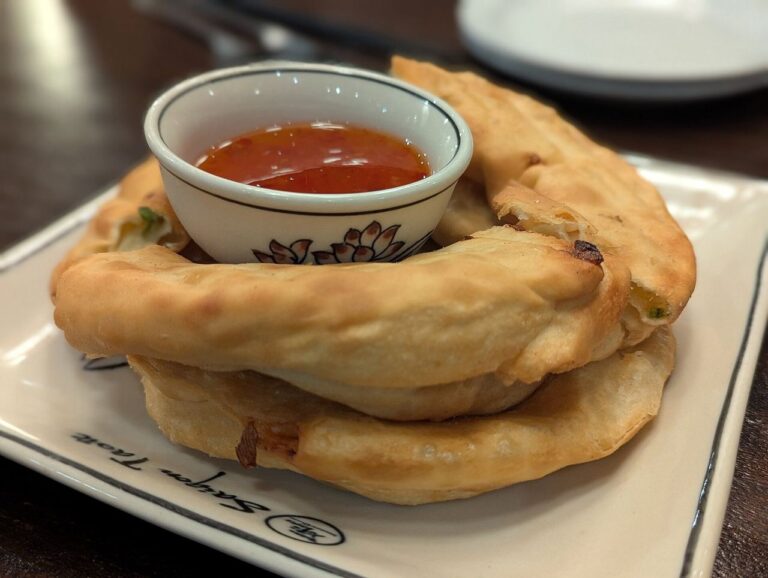
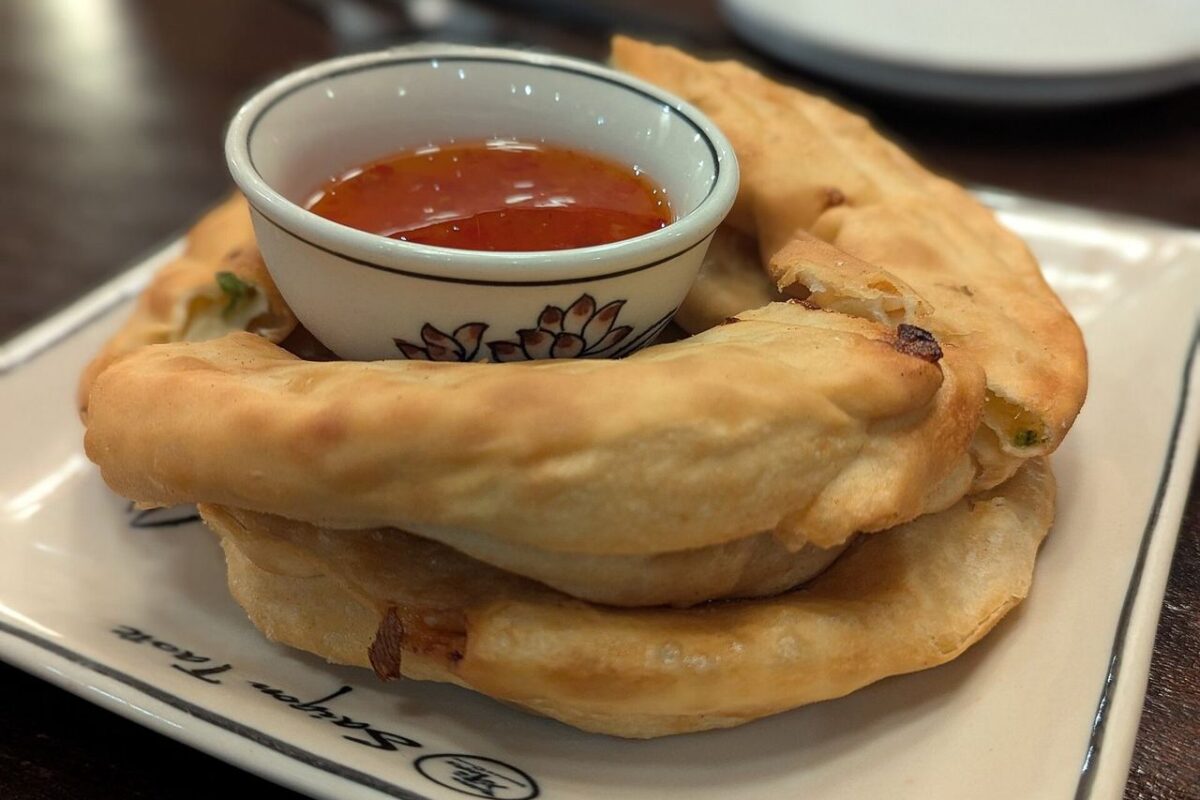
In most Canadian cities a scallion pancake is a menu item at a northern Chinese restaurant. In Edmonton it is something closer to civic property. Green onion cakes are sold at summer festivals, farmers’ markets, food trucks and in the freezer aisle, and locals tend to judge an event partly by whether the green onion cake line is long. This field guide explains how a Shandong street snack became an Edmonton habit, what to look for, and how to enjoy one in winter when the festival grounds are quiet.
One man keeps coming up
When Edmonton’s then historian laureate, Chris Chang-Yen Phillips, researched the city’s attachment to green onion cakes for his podcast in 2018, CBC reported that “everybody I asked for leads on this question kept pointing me back to Siu To.” To and his wife moved to Edmonton in the late 1970s; a 2018 profile in Rat Creek Press says they opened Happy Garden in the Parkallen neighbourhood in 1979, with the green onion cake as the first appetizer on the menu. He later opened Mongolian-style restaurants downtown, including the Mongolian Food Experience.
The Edmonton Journal’s Paula Simons wrote in 2015 that the cakes, also known as cong you bing, were inspired by a popular street food from To’s native Tsingtao (Qingdao) in Shandong province. Sources differ slightly on To’s route to Canada, so YumYak is sticking to the points they agree on: northern Chinese roots, a late-1970s Edmonton restaurant, and To as the person most responsible for making the cakes famous.
Festivals made it a city food
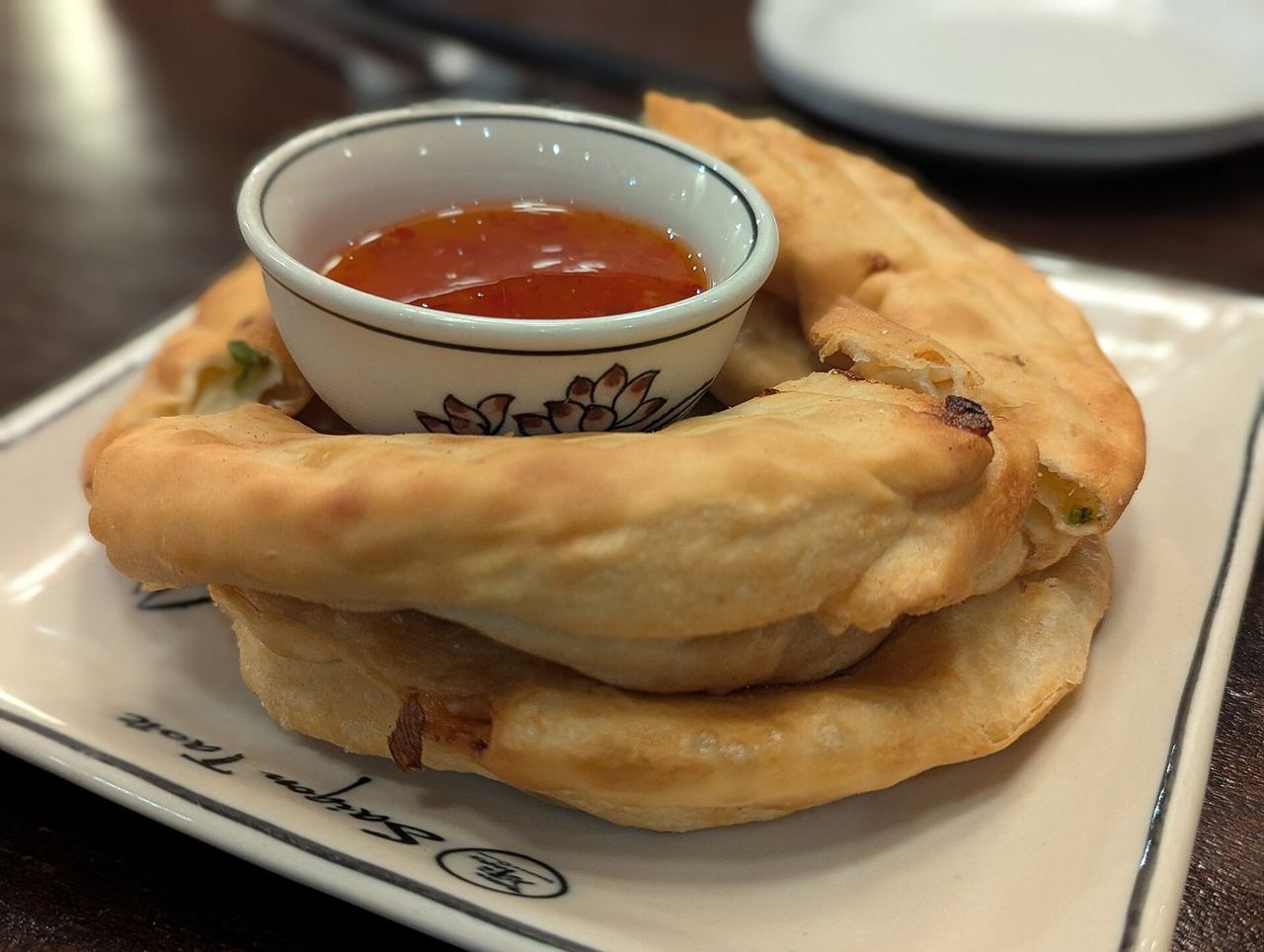
Restaurants alone did not do it. In the 1980s Edmonton was becoming a festival city, and organizers invited To to run food stands. He told Rat Creek Press that he brought many dishes but the green onion cake was the one people wanted. CBC’s report names Taste of Edmonton, the Edmonton Folk Music Festival and the Fringe as the events that “put green onion cakes on the map”.
Chang-Yen Phillips pointed to practical reasons too: the cakes have an unmistakable smell, are easy to carry and are not messy to eat while walking. To added a business reason. A cook can make several stir-fries in the time it takes to make one fresh green onion cake, he told CBC, which is why other kitchens were slow to copy him. Once the festival crowds knew the cakes, restaurants started calling To to buy them, and by 2015 the Journal reported that local manufacturer Delta Foods was supplying frozen cakes to more than 50 restaurants and to supermarkets.
Two styles, and how to tell them apart
Look at a few Edmonton menus and you will see two shapes. CBC’s piece describes both:
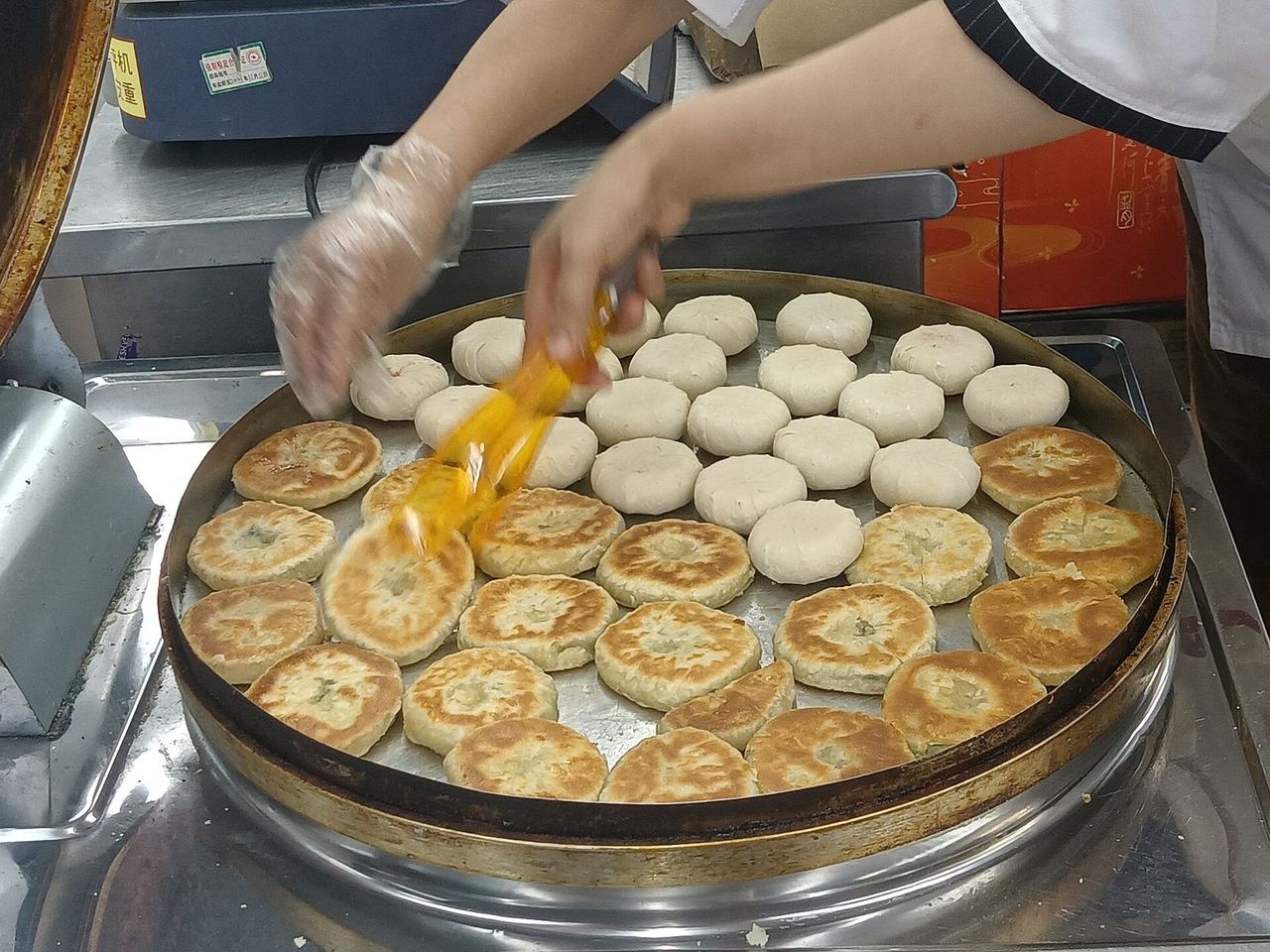
- Flat, round pancake: rolled with green onion and oil, coiled, flattened and pan-fried, so it tears into flaky layers. Chang-Yen Phillips suggested these are usually the handmade style.
- Ring or “doughnut” shape: a cake with a hole in the middle. His research suggested this shape may have been designed for deep-frying.
Neither is wrong. The flaky round style is closer to the northern Chinese snack; the ring style is the one many people remember from festival stands.
How to eat one like a local
- Get the sauce. Edmonton green onion cakes almost always come with a sweet chili sauce or hot sauce on the side or squeezed on top. Ask for it if it is not offered.
- Fold, don’t cut. Folding the cake in half or quarters keeps the sauce in and makes it easy to eat standing up.
- Eat it hot. The layers go leathery as they cool. If you are buying several for a group, order in rounds.
- Pair it simply. Hot and sour soup is a classic restaurant pairing, and at a market a cold drink is enough.
Finding green onion cakes in winter
Most festival stands are seasonal, so between November and April you are more likely to find green onion cakes on restaurant menus, at indoor farmers’ markets and in the frozen section of Asian and mainstream grocery stores. Siu To later sold his cakes under the Green Onion Cake Man name; reports about that business’s locations have changed over the years, so check its official website before making a special trip. YumYak has not visited a shortlist of cake stands and is not ranking them.
Planning a winter visit anyway? Our Edmonton Christmas markets guide lists indoor and outdoor markets where hot snacks are part of the draw.
Making them at home
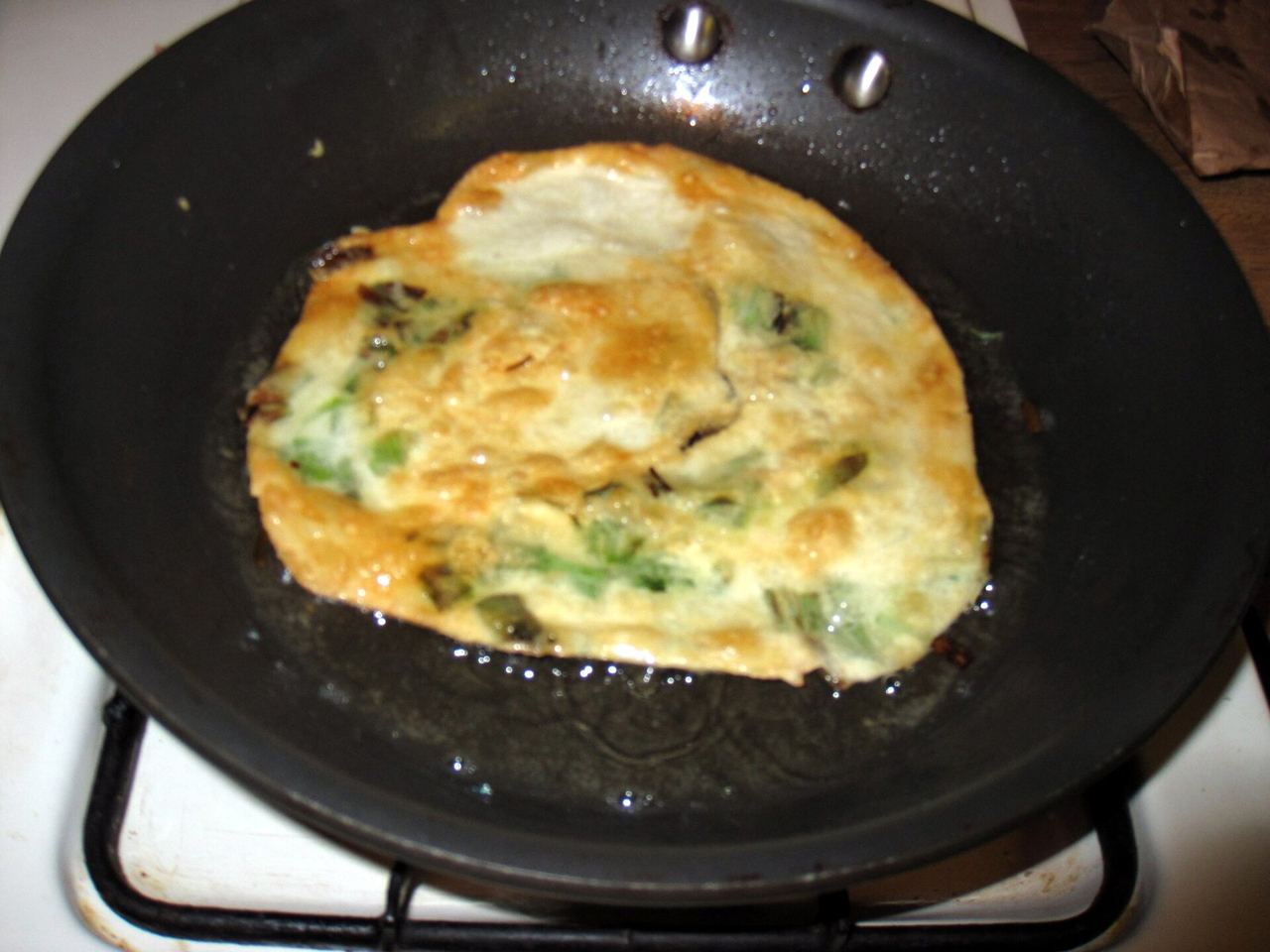
To has said he wanted people to make the cakes themselves and posted a video showing his method in 2018. The basic technique used by most home cooks: make a soft hot-water dough, rest it, roll it thin, brush with oil, scatter with salt and chopped green onion, roll into a rope, coil it like a snail, rest again, then roll flat and pan-fry in a heavy skillet until both sides are blistered. A cast-iron skillet holds heat well for this; we explain the trade-offs in our taco night tools guide, where the same pan appears.
FAQ
Are green onion cakes the same as scallion pancakes?
They come from the same northern Chinese flatbread tradition. In Edmonton, “green onion cake” is the local name and the style is usually served with chili sauce.
Who brought green onion cakes to Edmonton?
CBC, the Edmonton Journal and Rat Creek Press all credit restaurateur Siu To, who served them at Happy Garden from 1979 and at city festivals in the 1980s.
Can I find them outside Edmonton?
Scallion pancakes are common at northern Chinese restaurants across Canada, but the festival-stand culture around them is specific to Edmonton.
Sources
Show 4 sourcesHide sources
- CBC News, “How did green onion cakes become one of Edmonton’s favourite foods?” (March 2018) (accessed Nov. 24, 2026)
- Rat Creek Press, “Green Onion Cake Man opens on Alberta Ave” (Nov. 2018) (accessed Nov. 24, 2026)
- Edmonton Journal, Paula Simons, “Green onion cakes are my official taste of Edmonton’s summer” (Aug. 2015) (accessed Nov. 24, 2026)
- Green Onion Cake Man (official site) (accessed Nov. 24, 2026)
How we made this guide: this is a research-based guide compiled from the official, press and reference sources listed at the end. YumYak did not visit or taste-test for this article. Hours, prices and availability change, so check official sites before you go.
Tours