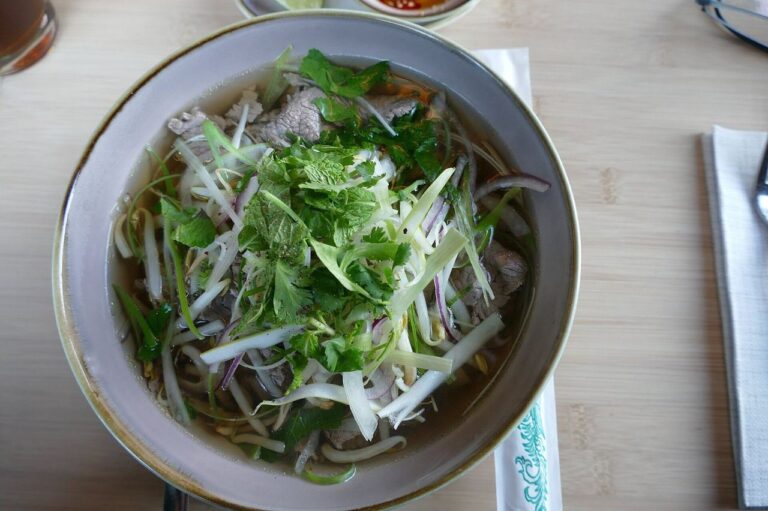
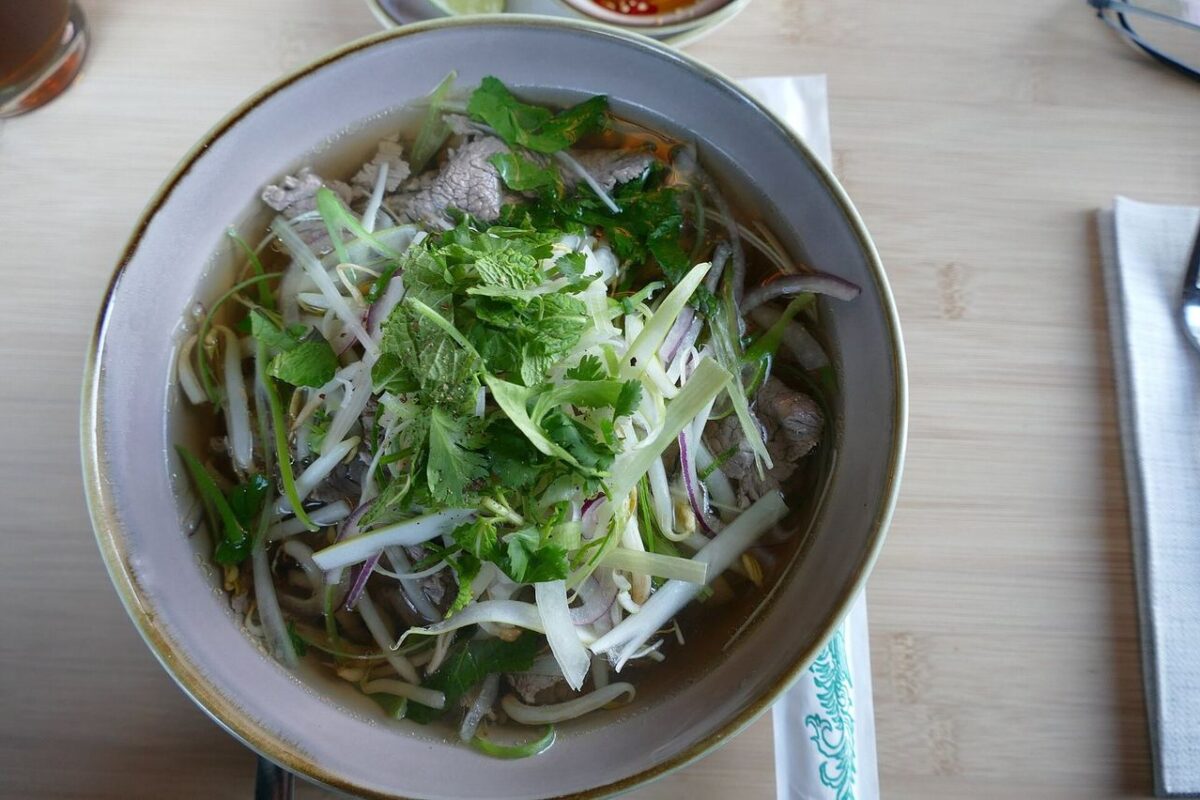
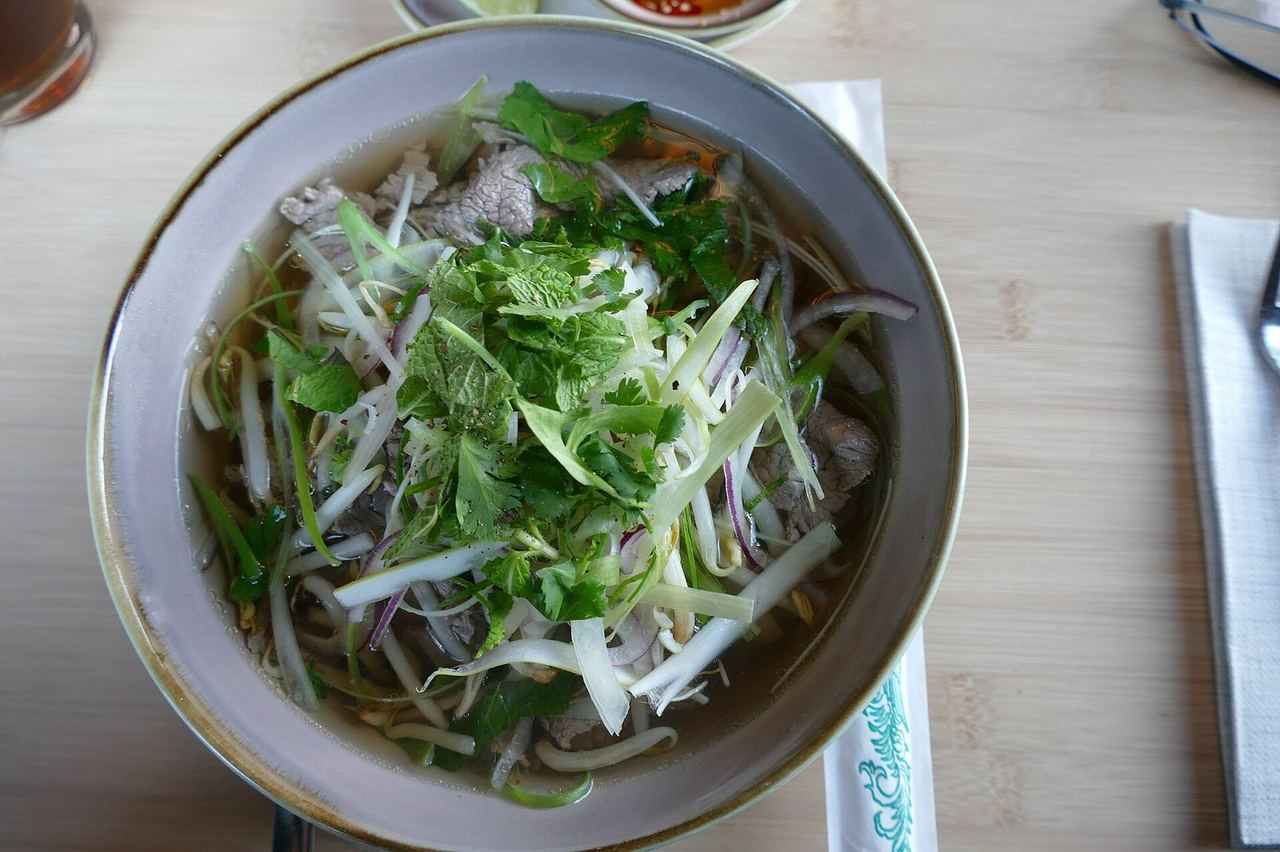
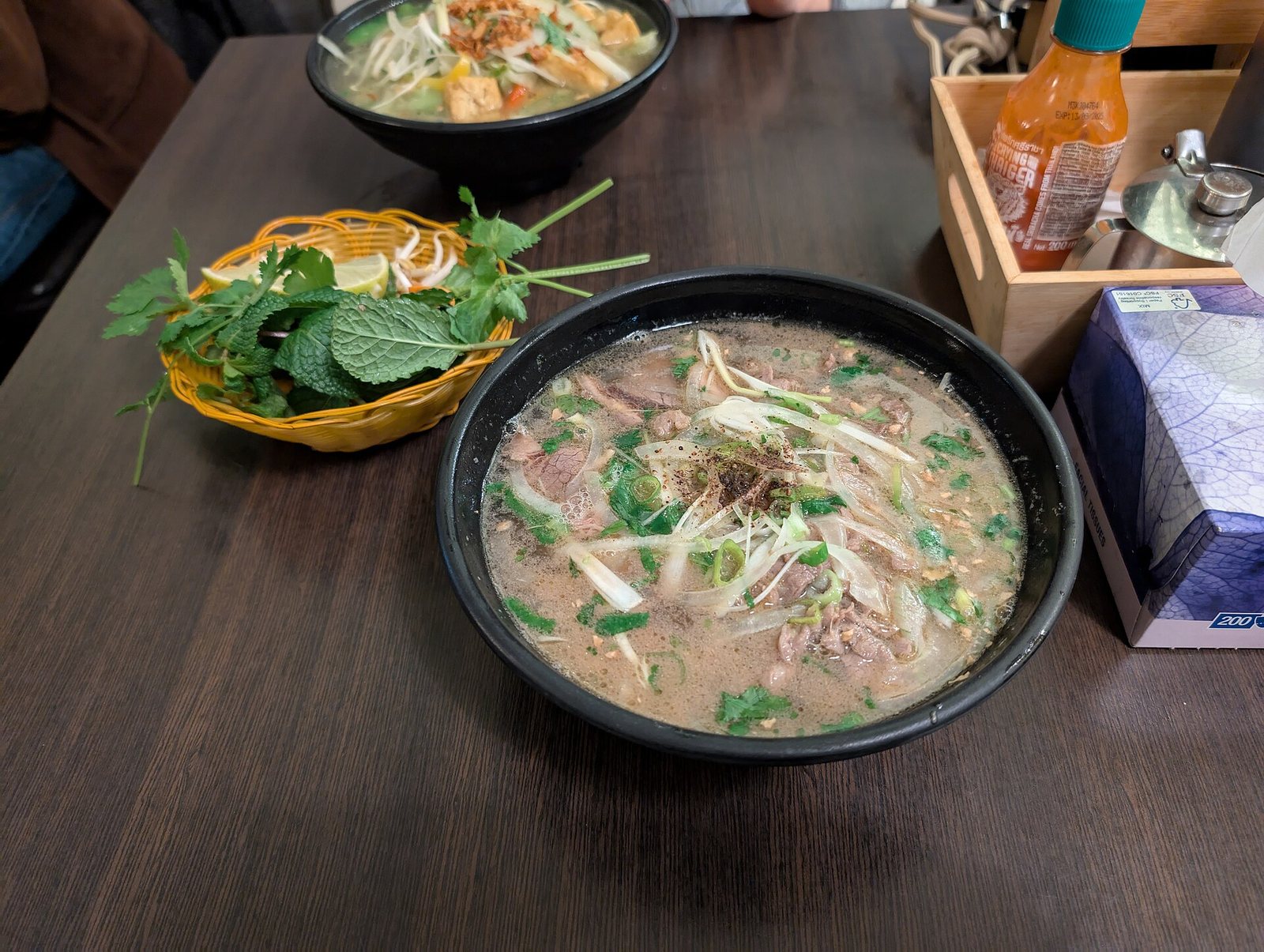
A great bowl of pho or ramen is mostly about broth and timing: a long, clear simmer, noodles cooked at the last minute, and everything assembled fast while the soup is still scalding. You do not need a restaurant kitchen for that, but a few tools make it far less messy. This guide covers five picks chosen from specifications and listing details, with honest notes on who should skip each one.
What matters for noodle soup
- Pot volume: a beef-bone pho broth needs room for bones plus water. A 12-quart pot gives headroom for a family batch; 8 quarts is enough for two to four servings.
- Fast draining: noodles go soft in seconds, so a wide strainer that lifts them out in one scoop beats tipping a pot into a colander.
- Portioning: a ladle of known volume lets you pour the same amount of broth into every bowl.
- Bowl size: restaurant noodle bowls hold far more than cereal bowls; under-sized bowls are the most common home mistake.
How we chose these picks
We started from the techniques the dish needs, then looked for widely available products on Amazon.ca that match those needs on paper: size, material and design as described by the maker and the listing. We checked each listing on Nov. 24, 2026 to confirm it was in stock and sold on Amazon.ca, and we skipped listings that were unavailable. We have not tested these items ourselves, and we do not invent ratings or prices. For every pick we name a cheaper or simpler alternative, because many of these jobs can be done with what you already own.
Our research-based picks
These are research-based picks, chosen from product specifications, maker information and Amazon.ca listing details checked on Nov. 24, 2026, not items YumYak tested in a kitchen.
Cuisinart Contour Stainless 12-Quart Stockpot with Glass Cover
- Best for
- Batch pho or tonkotsu-style broths for four or more
- What works
- The 12-quart size, as listed, leaves room for bones and a long simmer; the glass lid lets you watch for a gentle bubble without lifting it.
- What to know
- It is a large pot to store and heavy when full. If you cook for one or two, a smaller pot will be easier to handle.
- Alternative
- An 8-quart pasta pot, such as the Cook N Home pot in our fresh pasta guide, for smaller batches
- Last checked
- Nov. 24, 2026
Review status: research-based, not hands-on tested · Material connection: affiliate commission · Affiliate tag present: yes
Hiware Solid Stainless Steel Spider Strainer, 5.4 in
- Best for
- Lifting noodles, dumplings and blanched bean sprouts out of boiling water
- What works
- A wide wire basket on a long handle drains quickly and keeps your hand away from steam, which matters when you cook noodles portion by portion.
- What to know
- The 5.4-inch basket is sized for single portions rather than a whole pot of pasta, and it is not designed for deep-frying large batches.
- Alternative
- A larger 6- to 7-inch spider if you mostly cook family-size noodle batches
- Last checked
- Nov. 24, 2026
Review status: research-based, not hands-on tested · Material connection: affiliate commission · Affiliate tag present: yes
Starfrit Stainless Steel Asian Ladle, 13.8 in, 4 oz
- Best for
- Portioning broth evenly into each bowl
- What works
- The listed 4-oz capacity makes it easy to measure broth by the ladleful, and the long handle reaches the bottom of a tall stockpot.
- What to know
- A 4-oz ladle takes several pours per bowl; that is the point for portioning, but it is slower than a large soup ladle.
- Alternative
- A standard 8-oz soup ladle if speed matters more than measuring
- Last checked
- Nov. 24, 2026
Review status: research-based, not hands-on tested · Material connection: affiliate commission · Affiliate tag present: yes
ZOOFOX Ceramic Ramen Bowl Set, 60 oz, 2 Pack
- Best for
- Serving restaurant-size portions of pho, ramen or udon
- What works
- The listed 60-oz capacity and 9-inch width leave room for broth, noodles and toppings without spilling; the set includes chopsticks and spoons.
- What to know
- Large ceramic bowls take up cupboard space and get heavy when full. Check that they fit your dishwasher before buying.
- Alternative
- A set of three 60-oz bowls, such as the Yuanlity set on Amazon.ca, if you serve more people
- Last checked
- Nov. 24, 2026
Review status: research-based, not hands-on tested · Material connection: affiliate commission · Affiliate tag present: yes
Red Boat 40°N Fish Sauce, 17 fl oz
- Best for
- Seasoning pho broth and nuoc cham dipping sauce
- What works
- The label lists just two ingredients, anchovies and sea salt, which is why many cooks use it to season clear broths without added sugar.
- What to know
- It is strong and salty; add it at the end, a little at a time. It costs more than mass-market fish sauces.
- Alternative
- A widely available Thai or Vietnamese fish sauce from an Asian grocery store
- Last checked
- Nov. 24, 2026
Review status: research-based, not hands-on tested · Material connection: affiliate commission · Affiliate tag present: yes
We do not show Amazon prices or star ratings here; check Amazon.ca for current price and stock.
A simple noodle-soup workflow
- Make the broth a day ahead; chill it so you can lift off the fat.
- Bring a separate pot of water to a rolling boil for noodles.
- Warm the bowls with hot water while the noodles cook.
- Cook one portion of noodles at a time and lift them out with the spider straight into a bowl.
- Top, then ladle boiling broth over everything, which also cooks thin raw beef slices for pho.
Want a recipe to try this on? See our beef pho at home recipe, or if you would rather eat out, our Toronto pho guide and Calgary ramen guide.
Quick answers
Do I need a 12-quart pot for pho?
No. A 12-quart pot suits family batches of bone broth. Smaller households can use an 8-quart pot and make less broth.
Why use a spider strainer instead of a colander?
It lets you lift one portion of noodles at a time without draining the whole pot, so the water stays at a boil for the next batch.
Sources
Show 2 sourcesHide sources
Tours