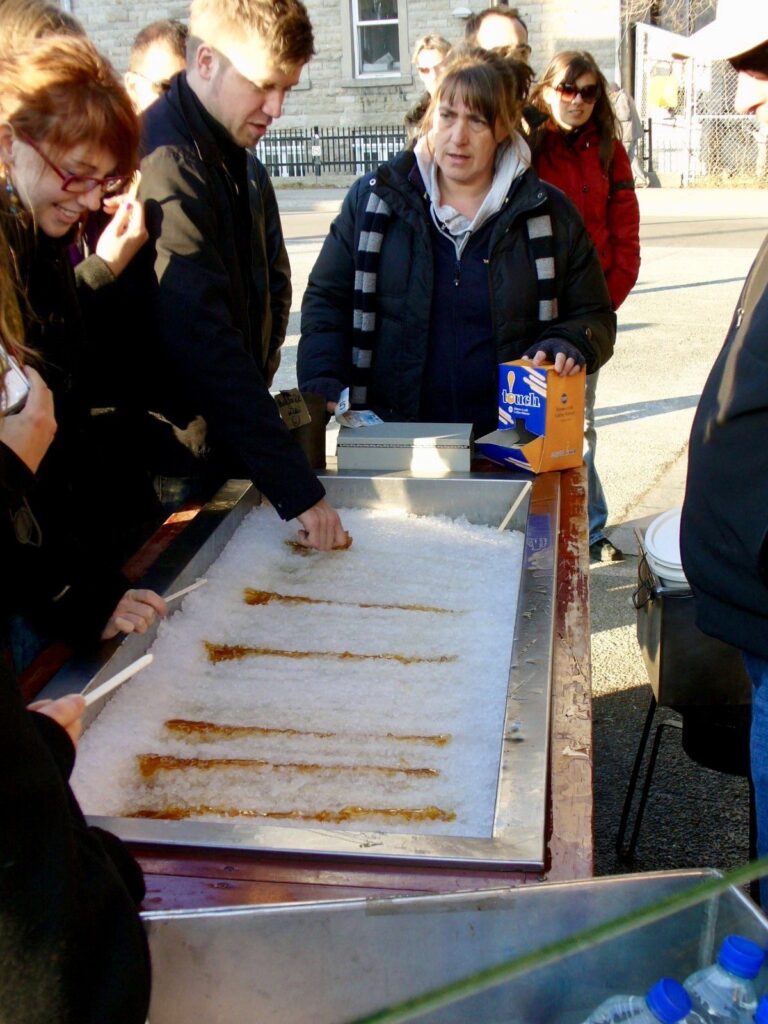
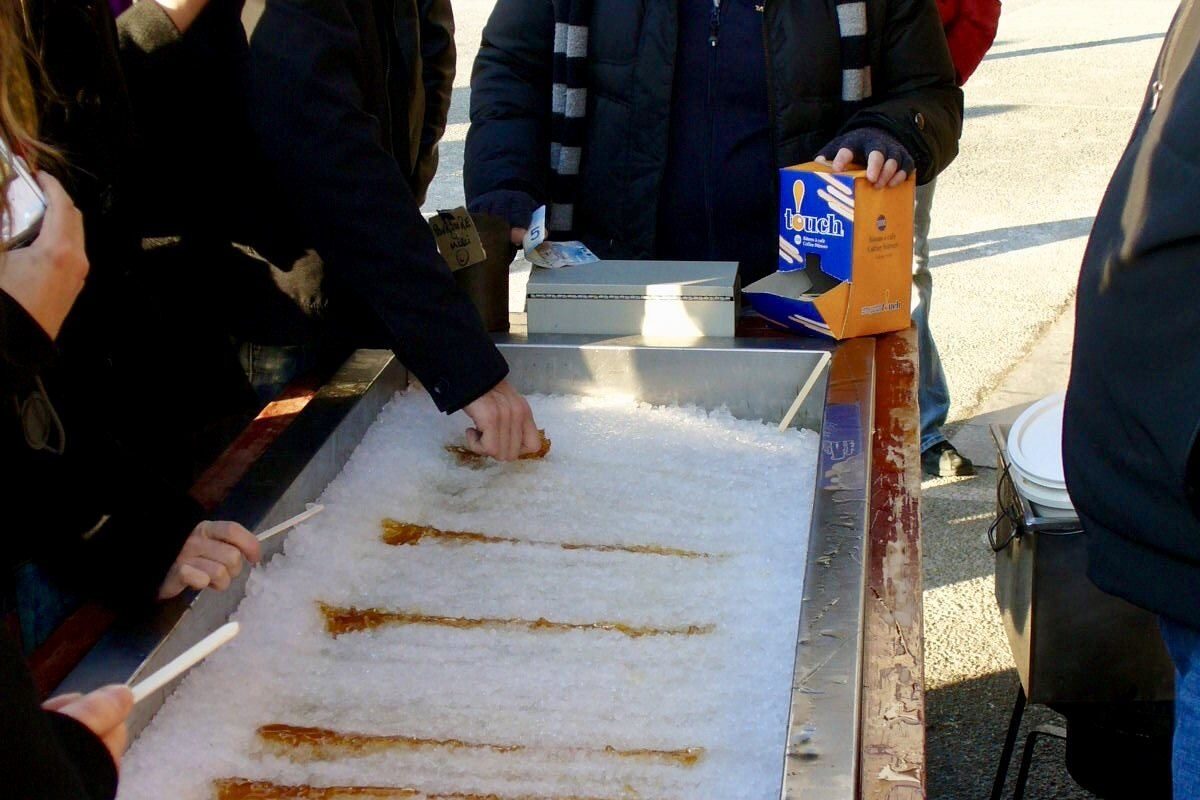
A cabane à sucre, or sugar shack, is where Québec’s maple syrup is made, and in spring it is also where Montrealers go to eat far too much. The traditional meal is a long, communal, maple-soaked feast that can confuse first-timers: half the dishes have nicknames, and the dessert is poured on snow. This decoder explains each part of the menu, how the season works, and how to plan a visit from Montréal.
Why Québec, and why spring
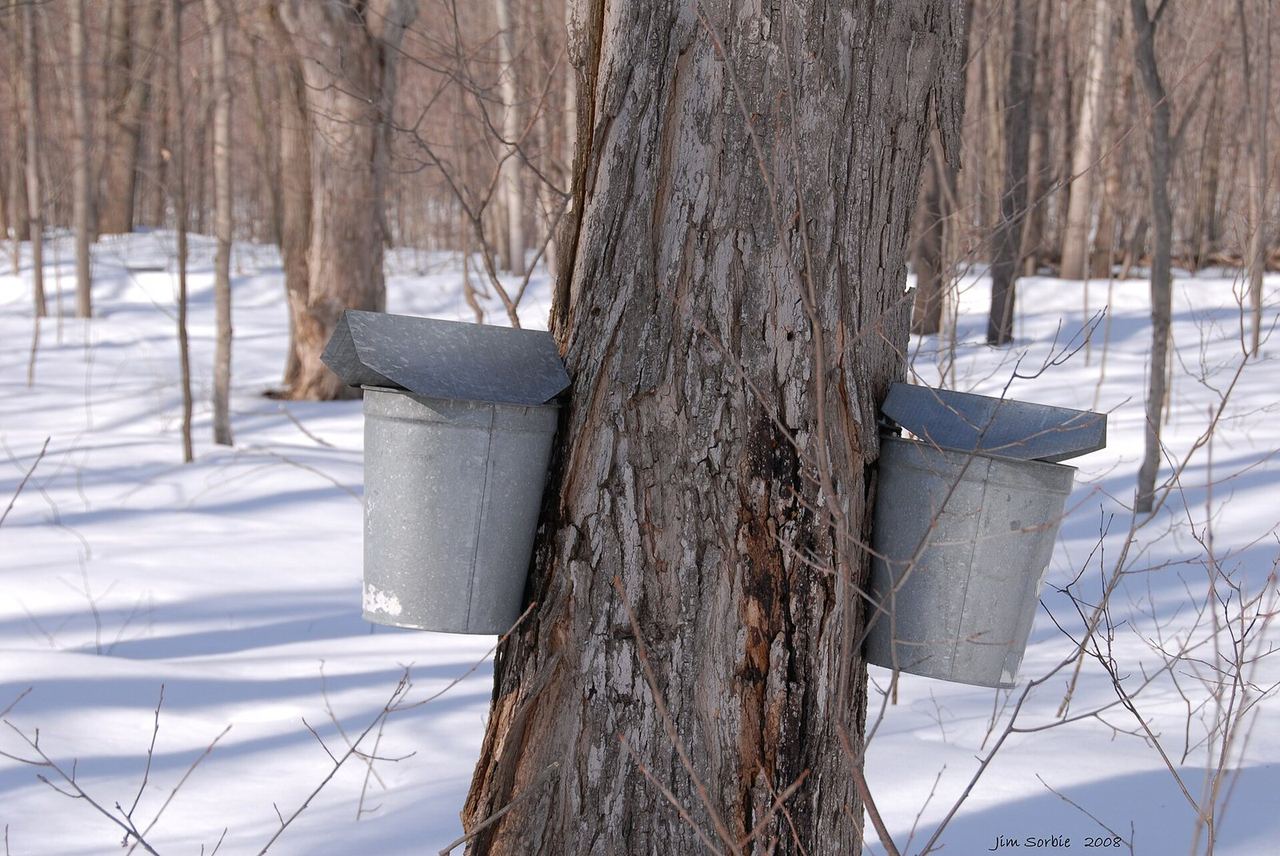
Maple syrup is made by boiling down sap that maple trees push up in early spring, when nights fall below freezing and days rise above it. According to the Producteurs et productrices acéricoles du Québec (PPAQ), Québec produced about 224.9 million pounds of syrup in 2025, roughly 71.7% of world production and about 90% of Canada’s. The sugar shack meal grew out of that harvest: crews and families ate hearty, salty, fatty food during long days of collecting and boiling, and the syrup went on everything.
Most sugar shacks around Montréal open their dining rooms only during the sugaring season. Daily Hive’s roundup of shacks near the city describes the usual window as early March to mid-April, but it shifts with the weather each year, so check each shack’s dates and book ahead, especially for weekends.
The menu, plate by plate
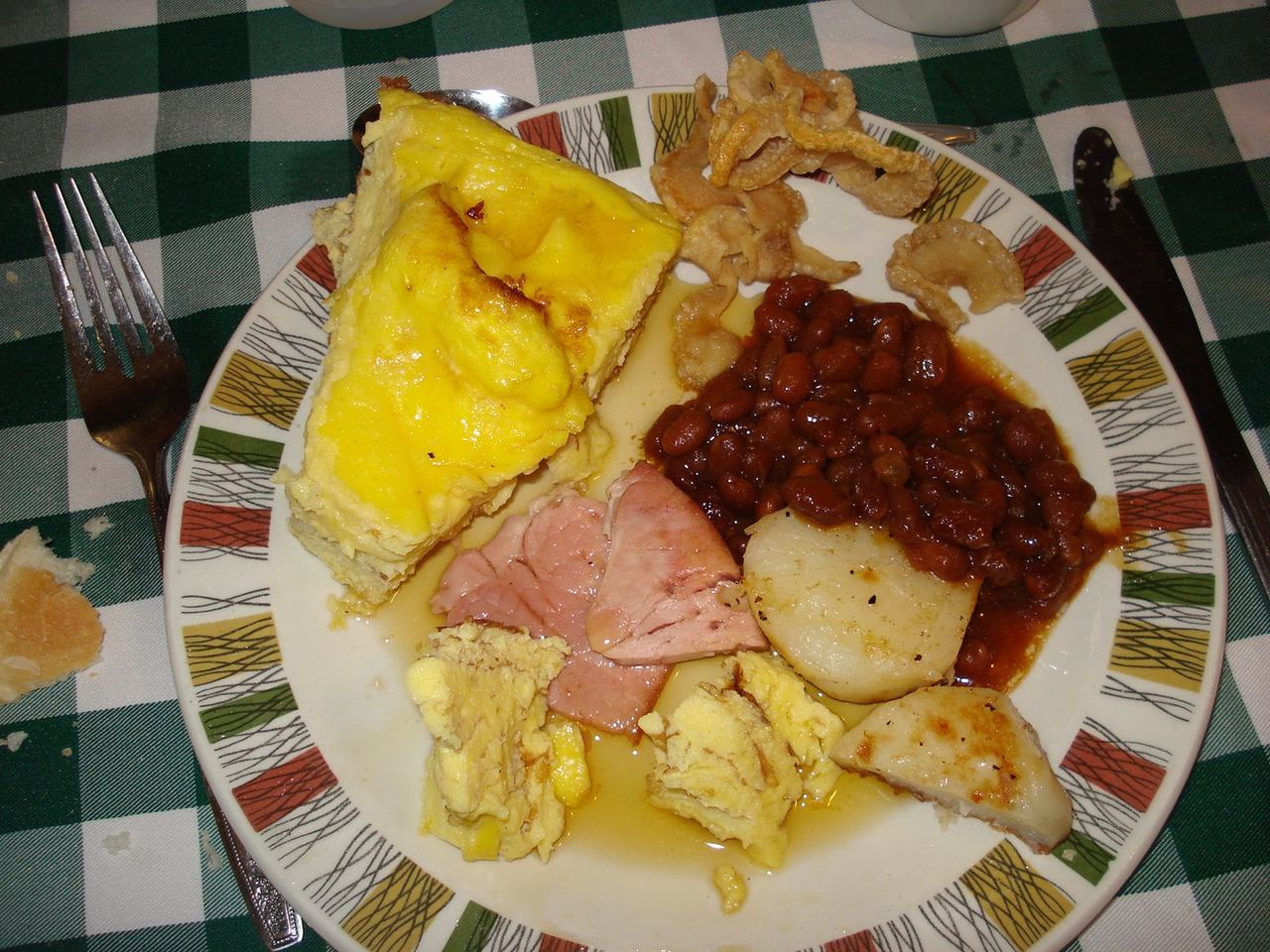
Every shack has its own version, but most traditional menus include some or all of the following. Dishes usually arrive family-style.
- Soupe aux pois (pea soup): a thick yellow split-pea soup, often cooked with salt pork. It is usually the first course.
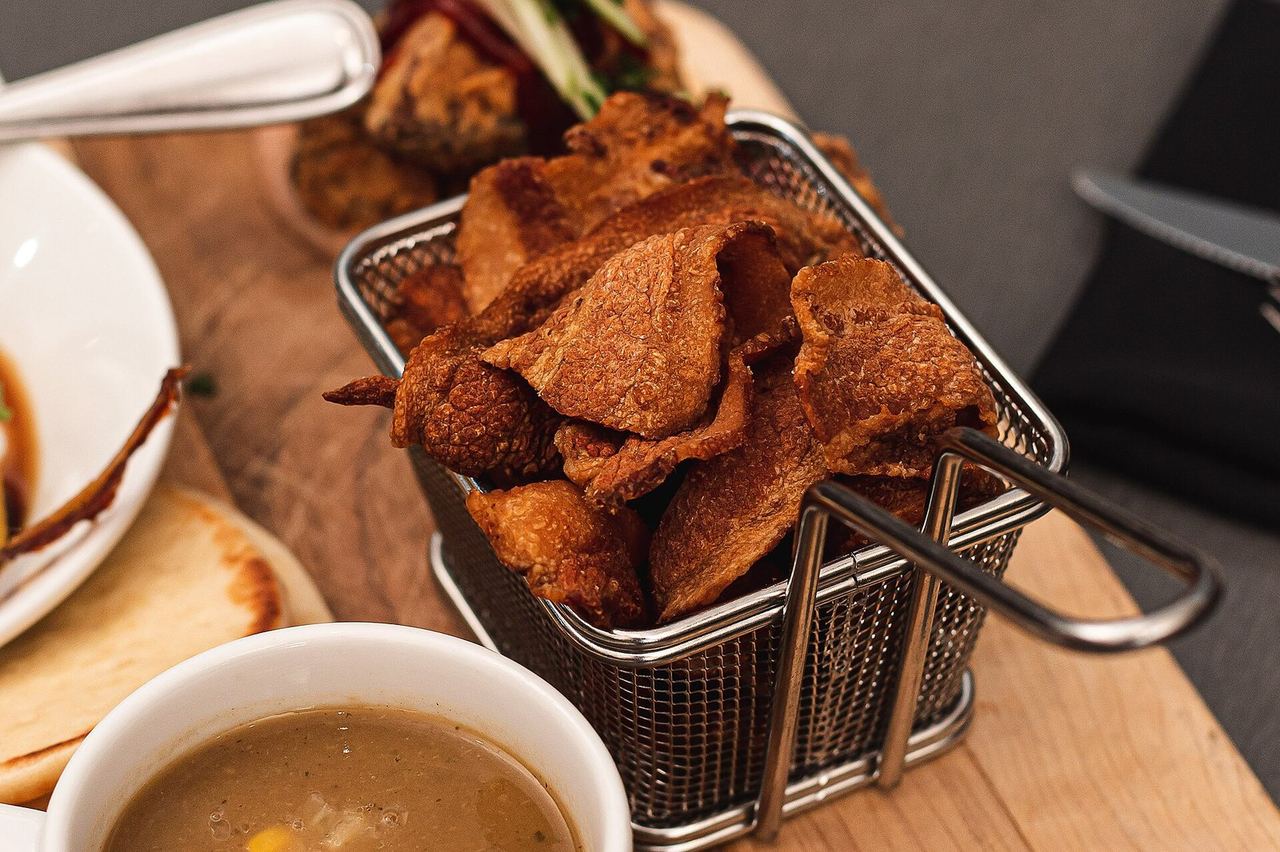
- Oreilles de crisse: crisp, deep-fried strips of salt pork. The name is a Québec swear-word joke, roughly “Christ’s ears”. Expect something between pork rinds and bacon; many people drizzle them with syrup.
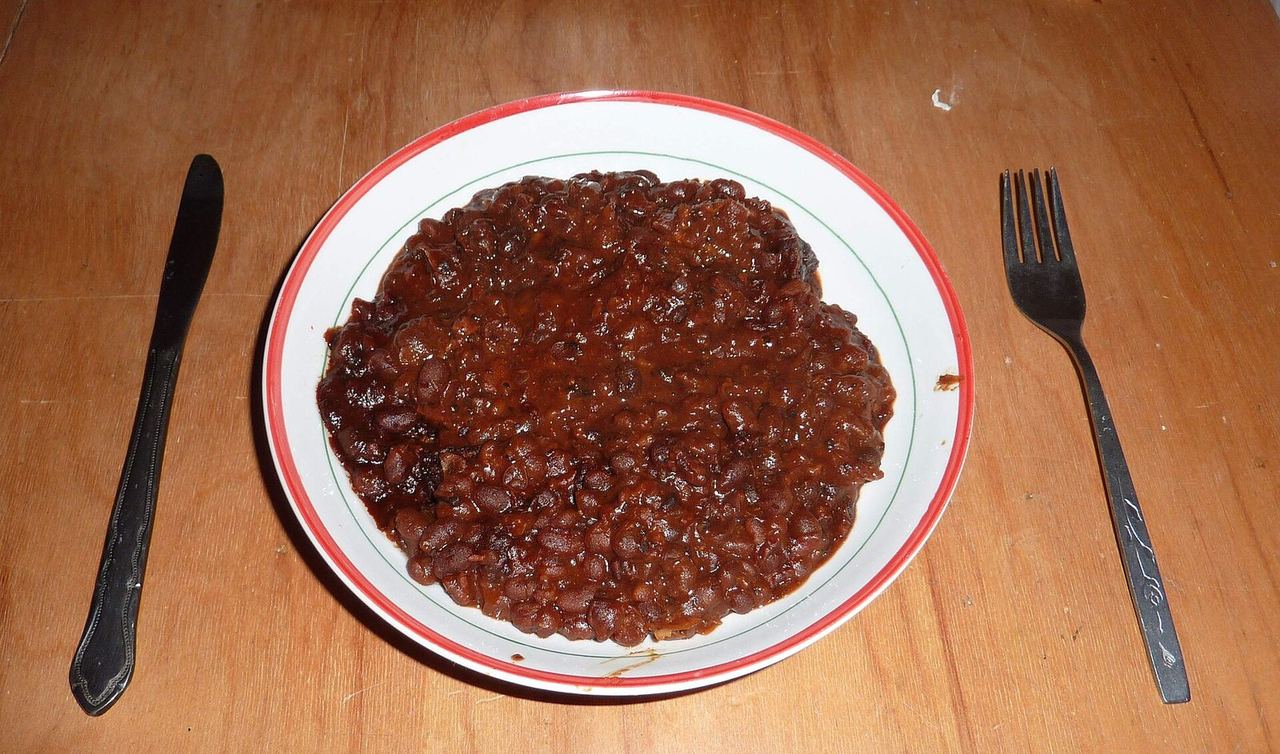
- Fèves au lard: beans baked slowly with salt pork and maple or molasses. Sweet, salty and soft.
- Jambon (ham): often a maple-glazed or syrup-baked ham.
- Omelette or œufs dans le sirop: a puffy baked omelette, or eggs poached in syrup at some shacks.
- Saucisses and pommes de terre: breakfast sausages and potatoes to round things out.
- Cretons: a spiced pork spread for bread, also a Québec breakfast staple.
- Marinades and pickled beets: the acid that keeps the meal from being overwhelming.
- Grands-pères dans le sirop or pouding chômeur: dumplings cooked in syrup, or the “unemployed person’s pudding”, a cake baked in a syrup sauce.
- Tarte au sucre: sugar pie, sometimes made with maple sugar.
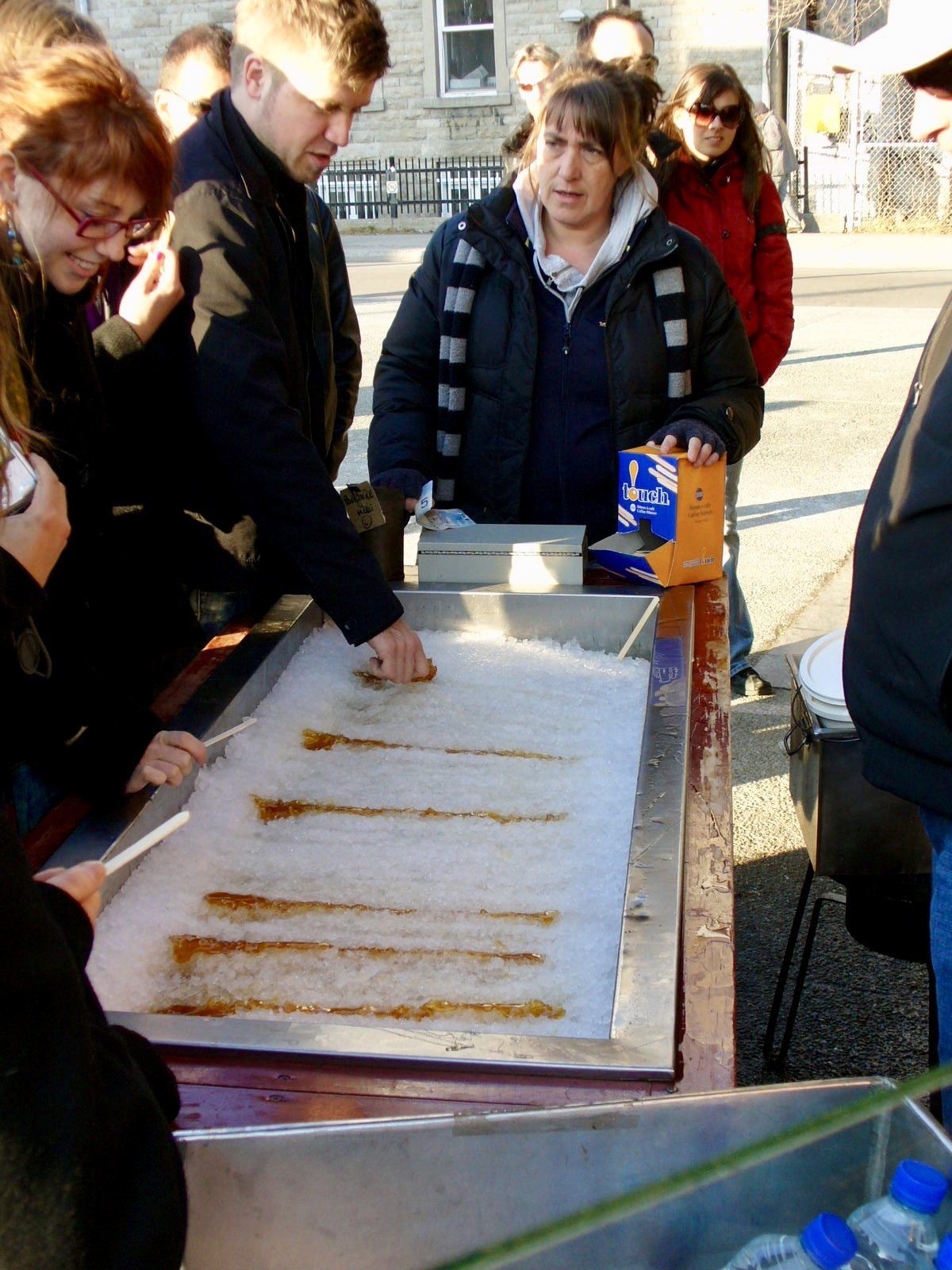
- Tire sur la neige: the finale. Syrup boiled to a soft-candy stage is poured in lines onto clean packed snow, left for a few seconds to firm up, then rolled onto a popsicle stick and eaten.
How to pace yourself
- Skip seconds of soup. It is filling and comes first for a reason.
- Use the syrup jug on the table sparingly at first. Most dishes are already sweet.
- Save room for the taffy. It is the part children remember, and at many shacks it is outdoors, so dress for snow and mud.
- Ask about vegetarian options when booking. The classic meal is very pork-heavy; many shacks now offer alternatives, but not all.
Visiting from Montréal
Sugar shacks are spread across the regions around the city, including the Montérégie, the Laurentides and Lanaudière. The sugaring regions with the most production are farther away, in Chaudière-Appalaches and the Bas-Saint-Laurent, according to PPAQ’s 2025 statistics. Most visitors without a car book a group bus tour.
If you are in Montréal outside the season, Sucrerie de la Montagne, on Mont Rigaud about 68 km west of the city, describes itself as a sugar shack that is open all year with a reservation. Tourisme Montréal lists it as about 45 minutes away, with a year-round sugar shack menu, guided tours of its syrup-making facilities and bakery, and seasonal maple taffy. It is designated a Québec heritage site. Check its own site for current menus and booking.
YumYak has not dined at the shacks mentioned, and this is not a ranking. In spring, Tourisme Montréal and regional tourism offices publish lists of shacks with dates.
Take the taste home
Maple syrup in Québec is graded by colour and taste: golden with a delicate taste, amber with a rich taste, dark with a robust taste and very dark with a strong taste. Lighter syrups suit pouring and baking; darker ones stand up to cooking. To make tire at home, syrup must be boiled to a soft-ball candy stage, which a candy thermometer makes much safer. Our Montreal bagels guide and smoked meat guide cover the rest of a Montréal food weekend.
FAQ
When is sugar shack season in Québec?
Usually from early March to mid-April, depending on when the sap runs. Each shack sets its own dates.
Can you visit a sugar shack in winter or summer?
Some are open year-round with reservations, such as Sucrerie de la Montagne in Rigaud, about 45 minutes from Montréal.
What is tire sur la neige?
Maple taffy: hot syrup boiled to a soft-candy stage, poured onto snow and rolled onto a stick.
Sources
Show 6 sourcesHide sources
- Producteurs et productrices acéricoles du Québec, 2025 maple statistics (PDF) (accessed Nov. 24, 2026)
- PPAQ, “Québec, Leader of the Maple Industry” (accessed Nov. 24, 2026)
- Sucrerie de la Montagne (official site) (accessed Nov. 24, 2026)
- Tourisme Montréal, Sucrerie de la Montagne (accessed Nov. 24, 2026)
- Daily Hive, “7 sweet and syrupy sugar shacks worth checking out around Montreal” (March 2023) (accessed Nov. 24, 2026)
- Maple from Canada, maple syrup grades (accessed Nov. 24, 2026)
How we made this guide: this is a research-based guide compiled from the official, press and reference sources listed at the end. YumYak did not visit or taste-test for this article. Hours, prices and availability change, so check official sites before you go.
Tours