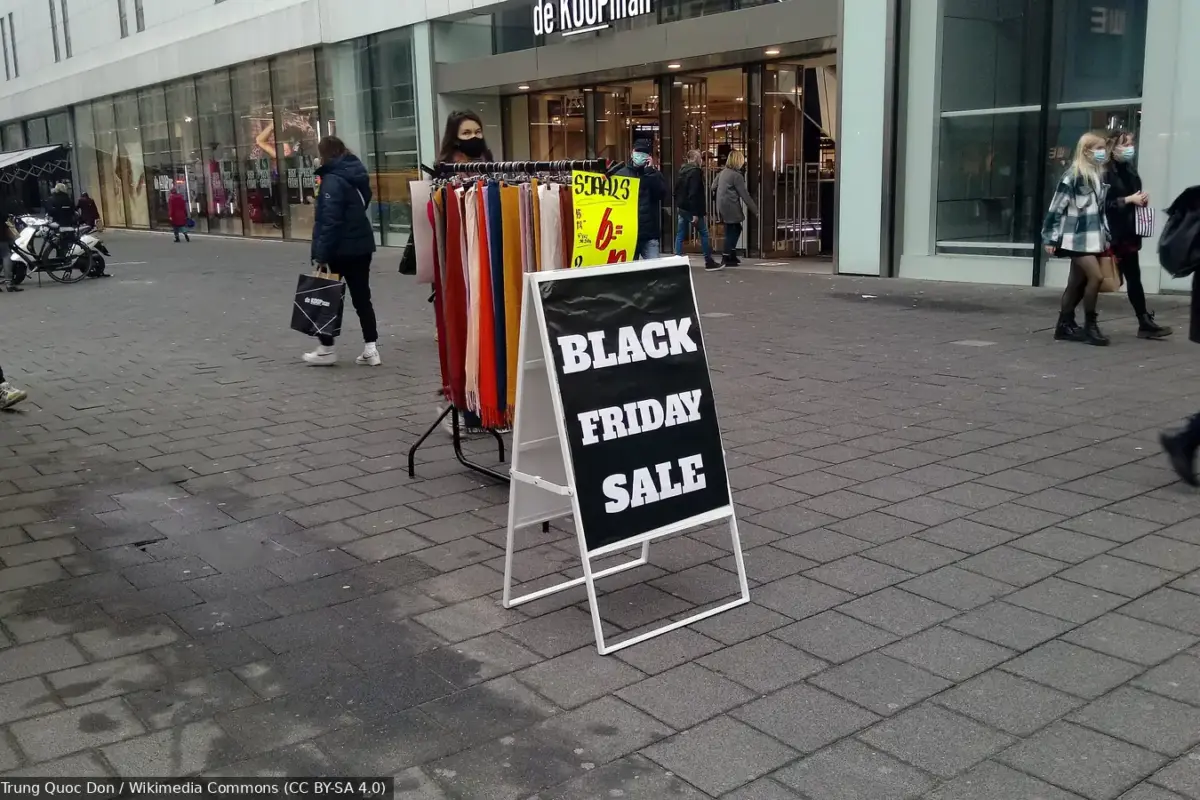
Black Friday lands on Friday, Nov. 27, 2026, and Cyber Monday on Nov. 30. For the next week, almost every kitchen listing on Amazon.ca will show a red percentage and a crossed-out “was” price. Some of those are genuine lows. Plenty are the same price as October with a red badge on top. This guide gives you a five-minute check you can run on any deal before you buy, explains what Canadian law actually says a “regular price” has to mean, and lists the kitchen tools we’ve already researched in our buying guides so you know which ones are worth watching.
What a “was” price is supposed to mean in Canada
The Competition Bureau, the federal regulator for misleading advertising, is blunt about it: a business can’t invent a higher regular price to make a sale look like a bargain. Its example is an item advertised as “$100, now $50” that never actually sold at $100. That’s a fake ordinary selling price, and it violates the Competition Act.
For a reference price to be legitimate, the Bureau says it has to pass one of two tests:
- Volume test: more than 50% of the product’s sales were at that price or higher within a reasonable period, usually within a year.
- Time test: the product was offered, in good faith, at that price or higher for a substantial period of time. In the Bureau’s enforcement guidelines, “substantial” means more than 50% of the time over the six months before or after the promotion.
In November 2025 the Bureau issued a Black Friday warning to businesses after what it described as a surge in complaints about inflated regular prices. The rules apply to retailers and marketplace sellers alike, but as a shopper you usually can’t see the sales data behind a strikethrough. That’s why you need your own check.
The five-minute deal check
1. Look up the price history, not the strikethrough
Paste the product link into a price tracker that covers Amazon.ca, such as camelcamelcamel’s Canadian site. Look at two numbers: the lowest price in the past 90 days and the price it sat at most of the time. If the “deal” price matches a low the item already hit in September or October, it’s a fair price, not a special one. If the “was” price only appeared a week or two before Black Friday, ignore it.
2. Match the exact model and size
Kitchen tools come in many near-identical versions. A 10.25-inch cast iron skillet and a 12-inch skillet from the same brand are different products with different prices, and an enamelled Dutch oven may be listed in 4.5-, 5.5- and 7-quart sizes on one page. Check that the size, colour and model number in the deal are the ones you compared. Size variants on a shared listing can each have their own price history.
3. Do the per-unit maths on pantry items
For fish sauce, flour, rice or nori, the only number that matters is the price per 100 ml, per kilogram or per sheet. Multi-packs and “value” sizes aren’t always cheaper per unit than the single bottle, and pantry items have best-before dates. A 2-pack of fish sauce you won’t finish within a year isn’t a saving.
4. Check who sells and ships it
On the product page, look at the “Ships from” and “Sold by” lines. The same listing can switch between Amazon.ca and third-party sellers, each with its own price, delivery time and return terms. A low price from a seller shipping from abroad may arrive after the holidays.
5. Read the return window before you check out
Holiday return windows and seller-specific return rules are shown at checkout and on the order page. Screenshot the deal page and the return terms. If a price drops further after you buy, a clear return window gives you the option to return and rebuy.
What tends to be worth buying on sale, and what isn’t
This is our editorial view, based on how these products are made and priced rather than on sales data:
- Usually worth it: durable “buy once” tools whose design barely changes year to year, like cast iron skillets, enamelled Dutch oven pots, carbon steel woks, chef’s knives and digital scales. A good discount on these is pure saving, because there’s little reason to wait for a newer model.
- Worth it if you already wanted one: small electrics such as rice cookers and ice-cream makers. Compare the model number carefully, because older and newer versions often sit side by side.
- Usually skip: 15-piece gadget sets, “as seen on TV” slicers and novelty appliances you wouldn’t have bought at full price. A large percentage off a tool you’ll use twice a year is still money spent.

Our kitchen watch list for Black Friday 2026
These are products we already researched for our buying guides, chosen from specifications and listing details, not tested in our kitchen. We aren’t quoting deal prices here, because Black Friday prices change by the hour; run the five-minute check on each one before you buy.
Common Black Friday mistakes in the kitchen aisle
- Buying the bundle for one piece. If you only want the skillet, a 5-piece set with a lid, scraper and grill pan is rarely the better buy.
- Forgetting your stove. Round-bottomed woks need a gas burner or a wok ring; induction hobs need magnetic bases. Check before you buy.
- Trusting the percentage. “40% off” says nothing on its own. Compare the final price with the 90-day history.
- Ignoring storage. A 12-quart pot or a stand mixer needs a cupboard. Measure first.
- Shopping in the mall rush without a list. If you’re heading to stores in person, our guide to Black Friday 2026 Toronto mall hours helps you plan the day.
FAQ
When is Black Friday 2026 in Canada?
Black Friday is Friday, Nov. 27, 2026, the day after American Thanksgiving. Cyber Monday follows on Monday, Nov. 30. Many retailers start their sales earlier in the week.
Are Amazon.ca Black Friday deals real discounts?
Some are and some aren’t. The strikethrough price alone doesn’t tell you. Check the item’s price history with a tracker; if the deal price is at or below its lowest price in the past few months, it’s a genuine low.
How do I report a fake sale price in Canada?
The Competition Bureau accepts complaints about deceptive marketing, including fake regular prices, through its website. Save screenshots of the listing and the date you saw it.
Research sources
- Competition Bureau Canada, “Ordinary selling price”: competition-bureau.canada.ca
- Competition Bureau Canada, “Businesses: Make sure your Black Friday ‘deals’ are real” (news release, Nov. 25, 2025): canada.ca
- Competition Bureau Canada, “Ordinary Price Claims” enforcement guidelines: competition-bureau.canada.ca
- camelcamelcamel Canada, Amazon.ca price tracker: ca.camelcamelcamel.com
- Product details: YumYak buying guides, listings checked on Amazon.ca on Nov. 24, 2026.
Tours