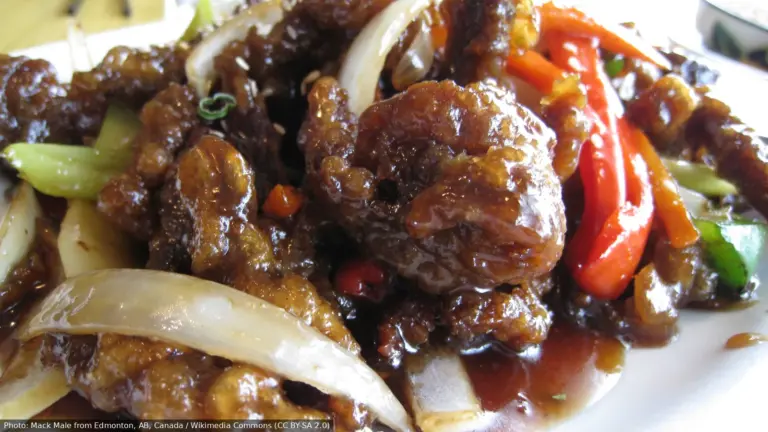
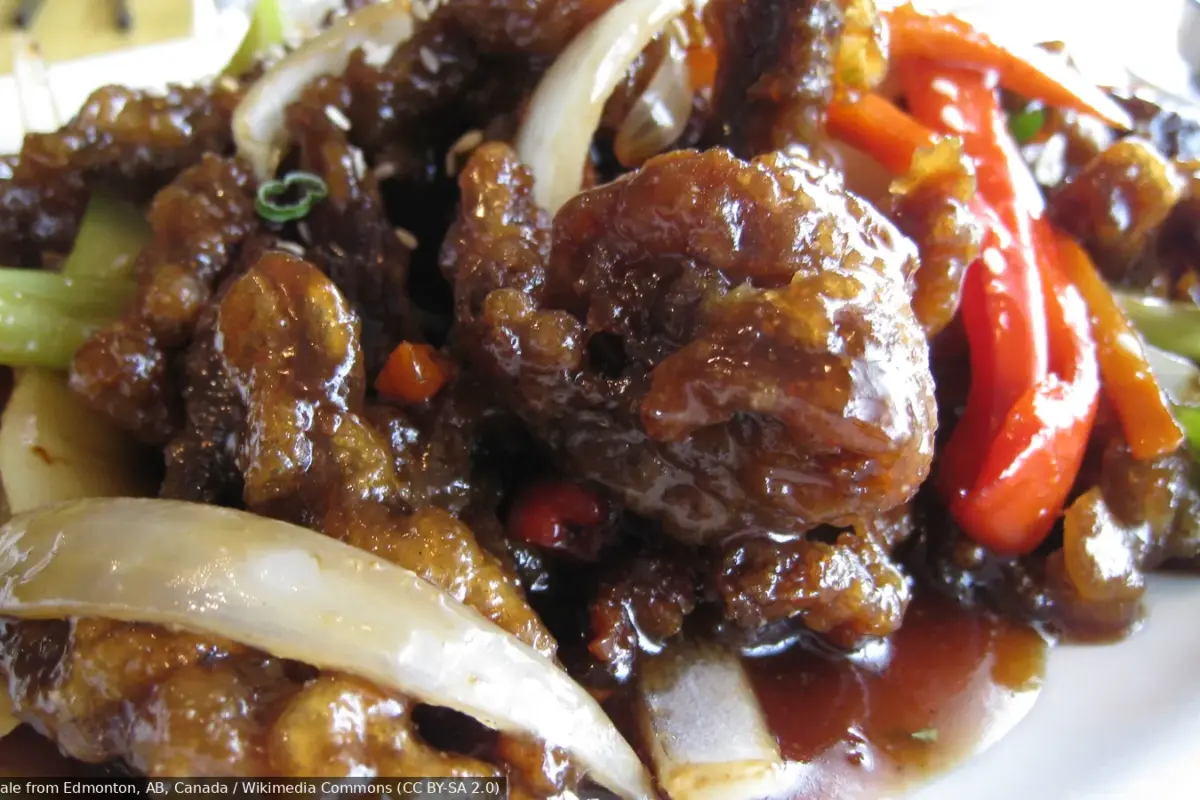
Ginger beef was invented in Calgary in the mid-1970s, and the complaint at home is the same one you hear about takeout: it goes soggy by the time the containers are open. The fix is the restaurant method. Fry the battered beef once to cook it, fry it again just before serving to make it shatter, and reduce the sauce to a thick glaze so it clings instead of soaking in. This recipe follows that two-fry approach, with metric amounts, oil temperatures you can check with a thermometer, and the timing that keeps the crunch for the length of a meal.
A dish built for Canadian takeout
Our ginger beef history explainer has the full story, but the short version matters for the recipe. At the Silver Inn, which opened in Calgary in 1975, cook George Wong reworked a chewy, jerky-like sweet beef into thin battered strips fried crisp “like a French fry” and coated in a sweet, garlicky chili sauce. Family members later told Daily Hive the original contained no ginger at all; customers gave it the name. That’s why the texture of the batter, not the ginger, is the part to get right.
Ingredients
Beef and batter
- 700 g (1½ lb) flank steak, or inside round
- 2 large eggs
- 125 ml (½ cup) cold water
- 160 g (1¼ cups) cornstarch, plus 2 tbsp for dusting
- ¼ tsp salt and a pinch of white pepper
- About 1.5 L (6 cups) canola or peanut oil, for frying
Sauce
- 80 ml (⅓ cup) soy sauce
- 45 ml (3 tbsp) rice vinegar, or Chinese red vinegar
- 30 ml (2 tbsp) Shaoxing wine, or dry sherry
- 65 g (⅓ cup) granulated sugar
- 60 ml (¼ cup) plum sauce or ketchup
- 125 ml (½ cup) water
- 1 to 2 tsp red chili flakes
- 1 tsp cornstarch mixed with 1 tbsp cold water
Vegetables and aromatics
- 1 large carrot, cut into thin matchsticks
- ½ green or red bell pepper, thinly sliced
- 2 tbsp finely julienned or minced fresh ginger (about a 5 cm piece)
- 5 garlic cloves, minced
- 2 green onions, sliced, and toasted sesame seeds, to finish
Method
- Firm and slice the beef (20 min freezer, 10 min slicing). Freeze the steak for 20 minutes so it slices cleanly. Cut it with the grain into 5 cm (2 in) pieces, then turn each piece and slice across the grain into strips about 5 mm (¼ in) thick. A sharp, plain chef’s knife such as the Victorinox Fibrox 8-inch makes thin, even strips easier, and even strips fry evenly.
- Make the sauce first (8 min). Whisk the soy sauce, vinegar, wine, sugar, plum sauce, water and chili flakes in a small pot. Simmer for 5 to 7 minutes until reduced by about a third, then stir in the cornstarch slurry and cook for 1 minute more. It should coat a spoon thickly. Take it off the heat. A thick sauce is the single biggest factor in keeping the beef crisp.
- Batter the beef. Whisk the eggs, cold water, 160 g cornstarch, salt and pepper into a smooth batter about as thick as heavy cream. Pat the beef dry, toss with the 2 tbsp dusting cornstarch, then add it to the batter and mix to coat each strip.
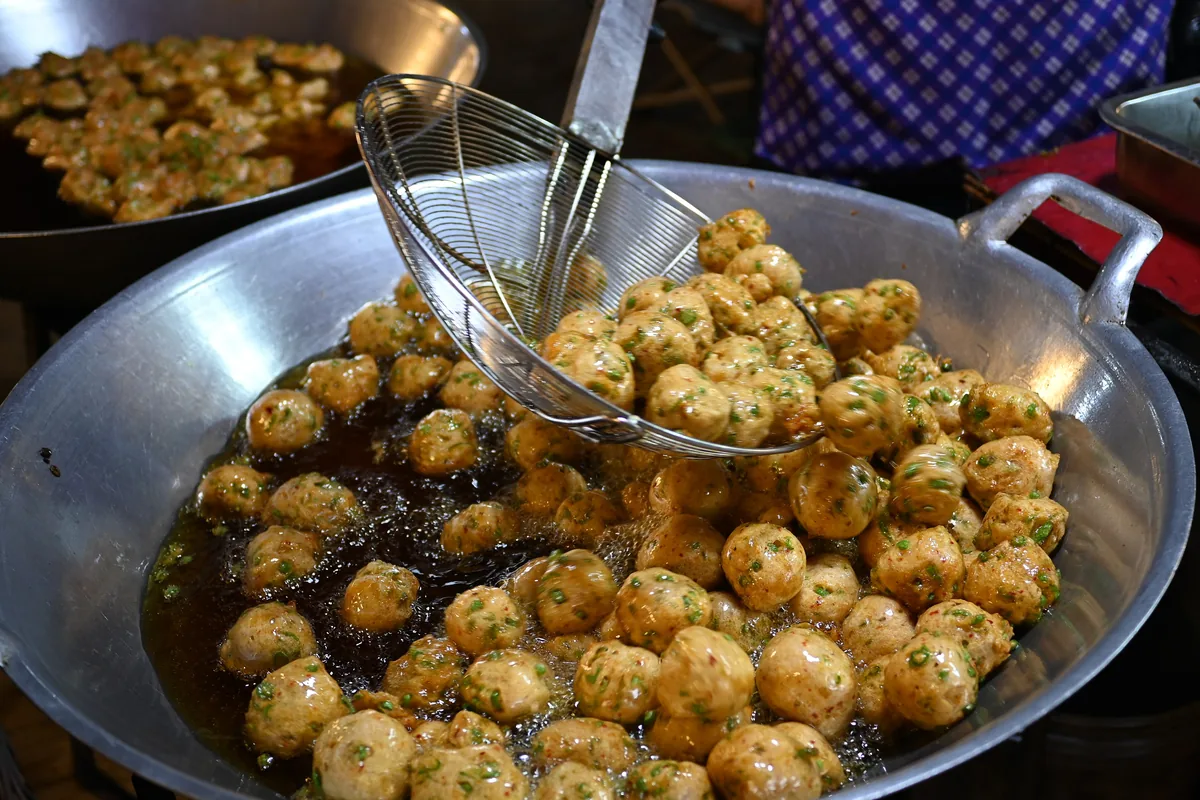
- First fry at 175°C (350°F), 4 to 5 minutes per batch. Heat the oil to 175°C in a wok or heavy pot, filled no more than one-third deep. A clip-on probe such as the TempPro TempDip fry thermometer lets you watch the oil without guessing. Drop strips in one at a time so they don’t clump, about a quarter of the beef per batch, and fry until pale gold and firm. Lift them out with a spider strainer onto a rack. Let the oil come back to 175°C between batches.
- Stir-fry the vegetables (3 min). In a second pan or a carbon steel wok, heat 1 tbsp oil over high heat. Stir-fry the carrot and pepper for 1 minute, add the ginger and garlic for 30 seconds, then pour in the reduced sauce and bring it to a bubble. Turn off the heat.
- Second fry at 190°C (375°F), 60 to 90 seconds. Raise the oil to 190°C and refry the beef in two batches until deep golden and audibly crisp. This step drives off moisture from the first fry. Drain for 30 seconds.
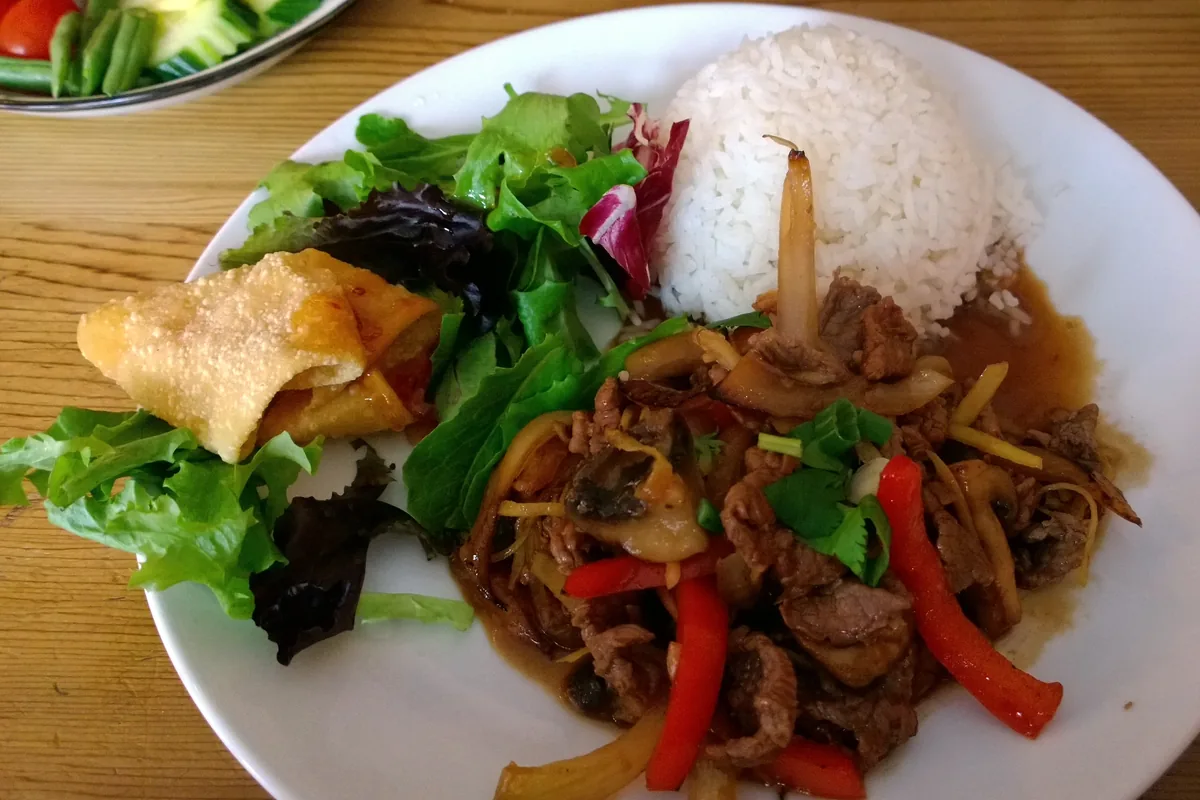
- Toss and serve immediately. Add the beef to the sauce, toss for 20 to 30 seconds until glazed, scatter green onion and sesame seeds, and bring it to the table with steamed rice. As Edmonton food writer Valerie Lugonja notes in her ginger beef recipe, the strips should be crisp rather than dark when they come out of the oil; the sauce is what darkens them.
Make-ahead plan for a dinner party
Restaurants pre-fry large batches and give each order a quick second fry before saucing, as Food Meanderings describes in its Calgary ginger beef recipe. You can do the same at home:
| When | Do this |
|---|---|
| Up to 1 day ahead | Make the sauce; refrigerate. Slice the vegetables; refrigerate. |
| Up to 2 hours ahead | Do the first fry. Cool the beef on a rack, uncovered. Refrigerate if holding longer than 2 hours, per Health Canada’s 2-hour rule. |
| 10 minutes before serving | Warm the sauce and vegetables, do the second fry, toss and serve. |
Mistakes that make ginger beef soggy
- Thin sauce. A watery sauce soaks straight into the batter. Reduce it until it’s syrupy before the beef goes in.
- Crowding the oil. Too many strips at once drop the temperature and the batter turns greasy instead of crisp. Fry in batches and let the oil recover.
- Thick strips. Anything much over 5 mm stays chewy inside by the time the batter is done.
- Saucing too early. Toss only when everyone is at the table. Even the best version softens within minutes.
- Reheating in the microwave. Leftovers lose their crunch. Re-crisp them in a 200°C (400°F) oven or air fryer for a few minutes and heat to 74°C, Health Canada’s reheating target for leftovers.
Swaps
- Air fryer: spray battered strips with oil and air-fry at 200°C for 10 to 12 minutes, shaking twice. It’s less crisp than deep-frying but works for a weeknight.
- Gluten-free: the batter is already flour-free; use tamari instead of soy sauce and check that the plum sauce is gluten-free.
- Spicier, older-school version: reader comments on A Canadian Foodie’s recipe recall early Calgary versions as hotter than today’s sweeter takeout style. Double the chili flakes and add a sliced fresh red chili with the garlic.
Oil safety
Use a heavy, deep pot or a wok on a stable burner, keep the oil no more than one-third deep, and never leave it unattended. Keep a lid nearby to smother a flare-up, and never use water on an oil fire. Let the oil cool completely before you strain and store or discard it.
More from Calgary and the Prairies
If you’re heading west, start with our best restaurants in Calgary guide and the Calgary food guide are the places to start, and Edmonton’s green onion cakes are the other great Prairie Chinese-Canadian invention. For more frying projects, try our chả giò crispy spring rolls.
FAQ
What cut of beef is best for ginger beef?
Flank steak is the most common choice because it slices into long, even strips. Inside round or sirloin also work. Slice across the grain, about 5 mm thick.
How do you keep ginger beef crispy?
Fry it twice (once to cook, once at a higher temperature just before serving), reduce the sauce until it’s thick, and toss the beef in it for no more than 30 seconds right before eating.
Is ginger beef Chinese or Canadian?
It’s a Chinese-Canadian dish created in Calgary. The Canadian Encyclopedia traces it to the Silver Inn restaurant, which opened in 1975.
Research sources
- The Canadian Encyclopedia, “Ginger Beef”: thecanadianencyclopedia.ca
- Daily Hive, Silver Inn and the origin of ginger beef (family interviews): dailyhive.com
- Valerie Lugonja, “Crispy Ginger Beef: The Authentic Calgary Recipe,” A Canadian Foodie (2014): acanadianfoodie.com
- Food Meanderings, “Calgary Ginger Beef Recipe” (restaurant double-fry note): foodmeanderings.com
- Health Canada, “Food safety tips for leftovers” (2-hour rule, reheat to 74°C): canada.ca
Tours