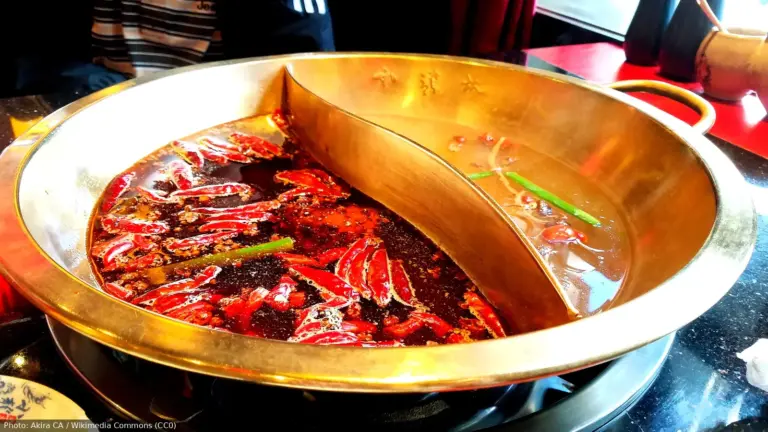
Hot pot is the easiest dinner party in winter: one pot of simmering broth in the middle of the table, plates of raw ingredients around it, and everyone cooks their own. There’s almost no plating, and for once the host gets to sit down. This guide covers two broths you can make from scratch (a gentle chicken-and-ginger broth and a numbing mala broth), the burner question that matters most indoors, a shopping list built for Canadian Asian grocers, and dipping sauces.
What hot pot is, briefly
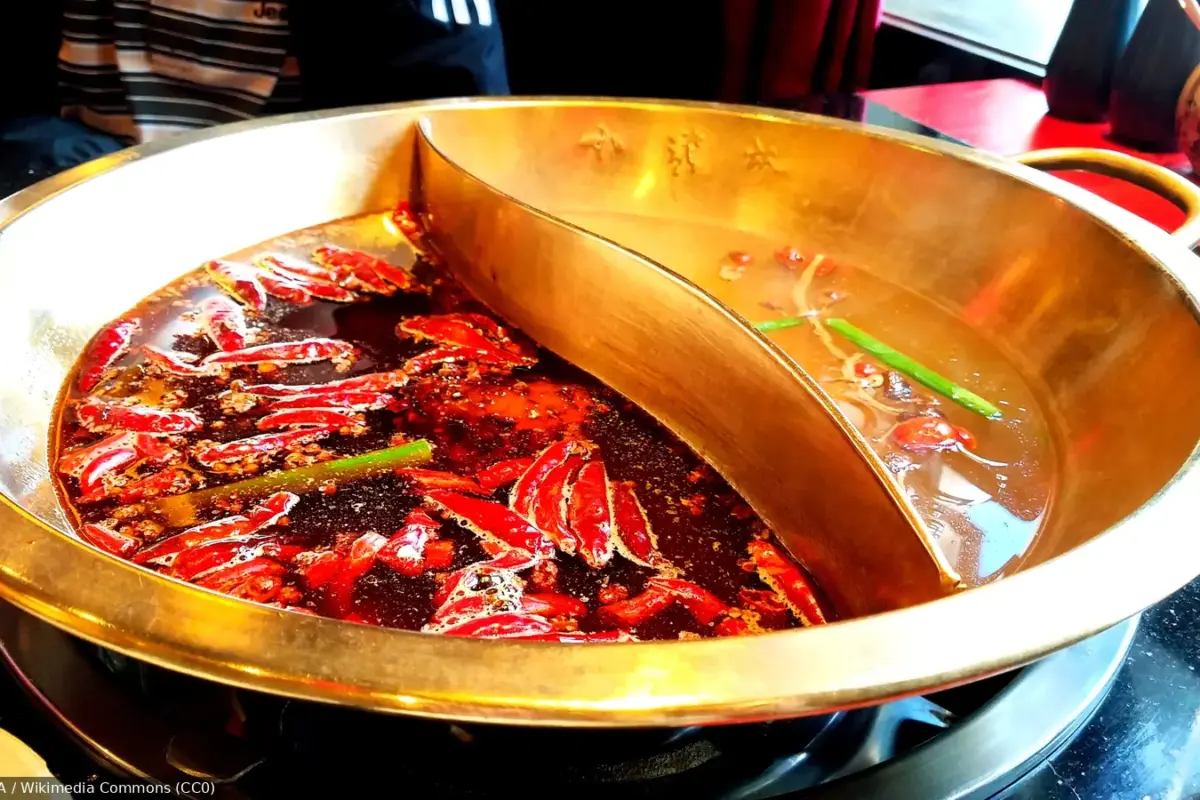
Many Chinese regions have their own hot pot. The best-known abroad is the red, numbing broth from Chongqing and Sichuan. The Chongqing municipal chronicles office traces it to boatmen and dock labourers on the Yangtze in the late Qing era, who simmered cheap beef offal and leftover vegetables with chilies, Sichuan pepper, ginger and beef tallow to fight the damp cold. Vendors later sold it from street stalls, and a restaurant brought it indoors in 1926. Chongqing added hot pot to its municipal intangible cultural heritage list in 2009. The split yuanyang pot, half red and half clear, is how most restaurants in Canada serve it today, and it’s the easiest way to feed a table with mixed spice tolerance.
First: the burner
Many restaurants use tabletop butane stoves, and they’re sold everywhere in Canada. Health Canada’s guidance is blunt: portable butane stoves should never be used indoors or in confined spaces, because they can produce carbon monoxide, which has no smell or colour. Health Canada has also warned about flash fires when the canister overheats, often because the grate was installed upside down or the pot was too big and covered the canister.
For a home table, use one of these instead:
- A portable induction burner with an induction-ready pot (a magnet sticks to the bottom). No flame, no fuel, no combustion gases.
- An electric hot pot, a pot with a built-in heating element, often sold with a divider.
- Your stove, with the pot carried to a trivet and returned to reheat. Clumsy, but it works for two or three people.
Whatever you use, keep the cord out of walking paths and don’t leave the burner unattended with children at the table.
Broth 1: chicken and ginger (clear)
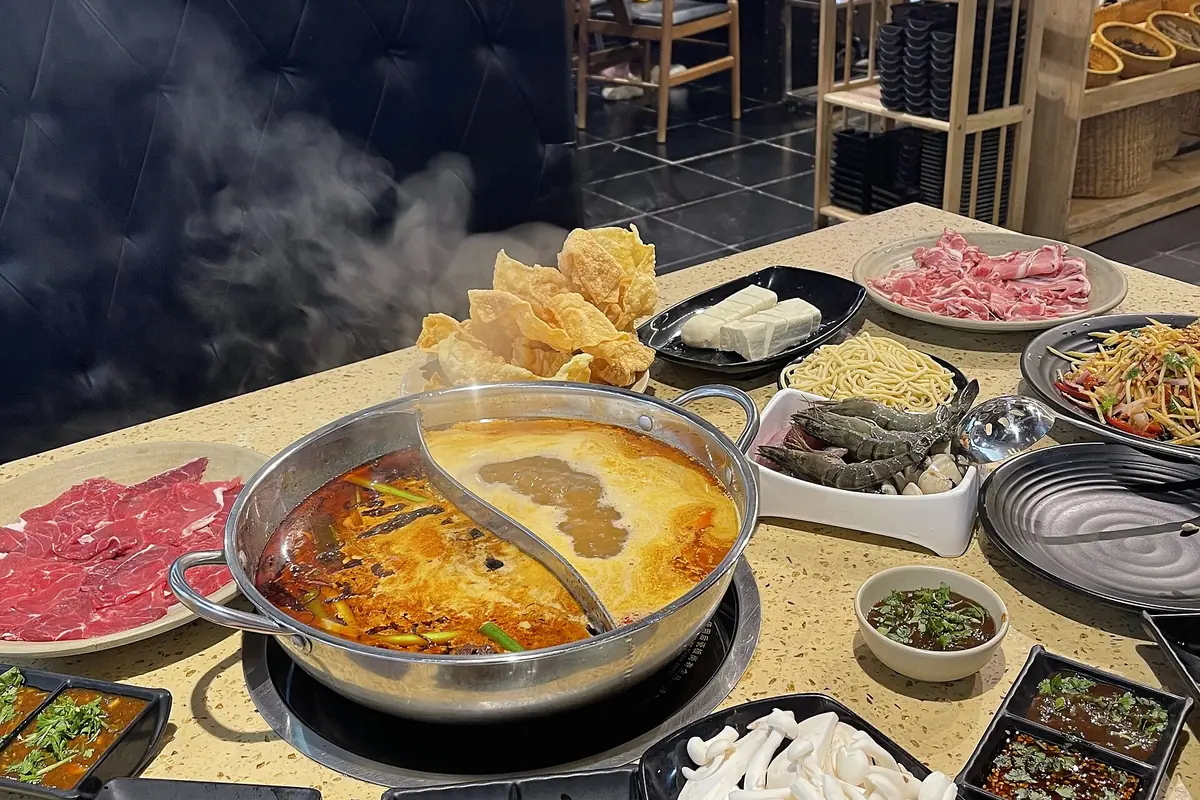
The clear side should taste good enough to sip. It also becomes the best soup of the night as everything cooks in it.
Ingredients (makes about 2.5 L)
- 1.5 kg chicken backs, wings or a whole carcass
- 3.5 L cold water
- 60 g fresh ginger, sliced and lightly smashed
- 4 green onions, white parts (keep the greens for serving)
- 4 dried shiitake mushrooms
- 8 dried red dates (jujubes) and 1 tbsp goji berries, optional
- 1 tsp salt to start, more at the table
Method
- Cover the chicken with cold water in a large pot, bring to a boil, boil for 3 minutes, then drain and rinse the bones. This blanching step keeps the broth clear.
- Return the bones to the clean pot with 3.5 L fresh water, the ginger, green onion whites and shiitake. Bring to a bare simmer and cook uncovered for 2 hours, skimming now and then.
- Strain. Add the dates and goji in the last 20 minutes, or add them straight to the hot pot. Season lightly; the broth reduces at the table.
Straining a big batch is easier with a wide spider strainer; the same tool is what you’ll use to fish dumplings and meatballs out of the pot later.
Broth 2: mala (red)
Store-bought hot pot bases (tallow blocks in Chinese-labelled boxes) work very well and are the norm in many homes. If you want to make it yourself, this is a moderate version. The heat builds as the broth reduces, so start mild.
Ingredients (for one side of a split pot)
- 100 g beef tallow, or 120 mL neutral oil
- 3 tbsp Pixian doubanjiang (chili bean paste), chopped
- 15 to 25 dried red chilies, snipped, seeds shaken out for less heat
- 2 tbsp red Sichuan peppercorns
- 40 g ginger, sliced; 8 garlic cloves, smashed
- 2 star anise, 1 small piece cassia bark, 2 bay leaves
- 1 tbsp fermented black beans, rinsed
- 1 tbsp rock sugar or brown sugar
- 1.5 L of the chicken broth above, or water
Method
- Melt the tallow or heat the oil in a wok over low-medium heat. Add the ginger, garlic and whole spices and fry for 2 minutes until fragrant.
- Add the doubanjiang and fry, stirring, for 3 to 4 minutes until the oil turns red. Keep the heat low; burnt paste is bitter.
- Add the chilies, Sichuan peppercorns and black beans and stir for 1 minute.
- Pour in the broth, add the sugar and simmer for 20 minutes. Transfer to the red side of the hot pot. Top up with plain broth during the meal as it reduces.
Shopping list for 4 people
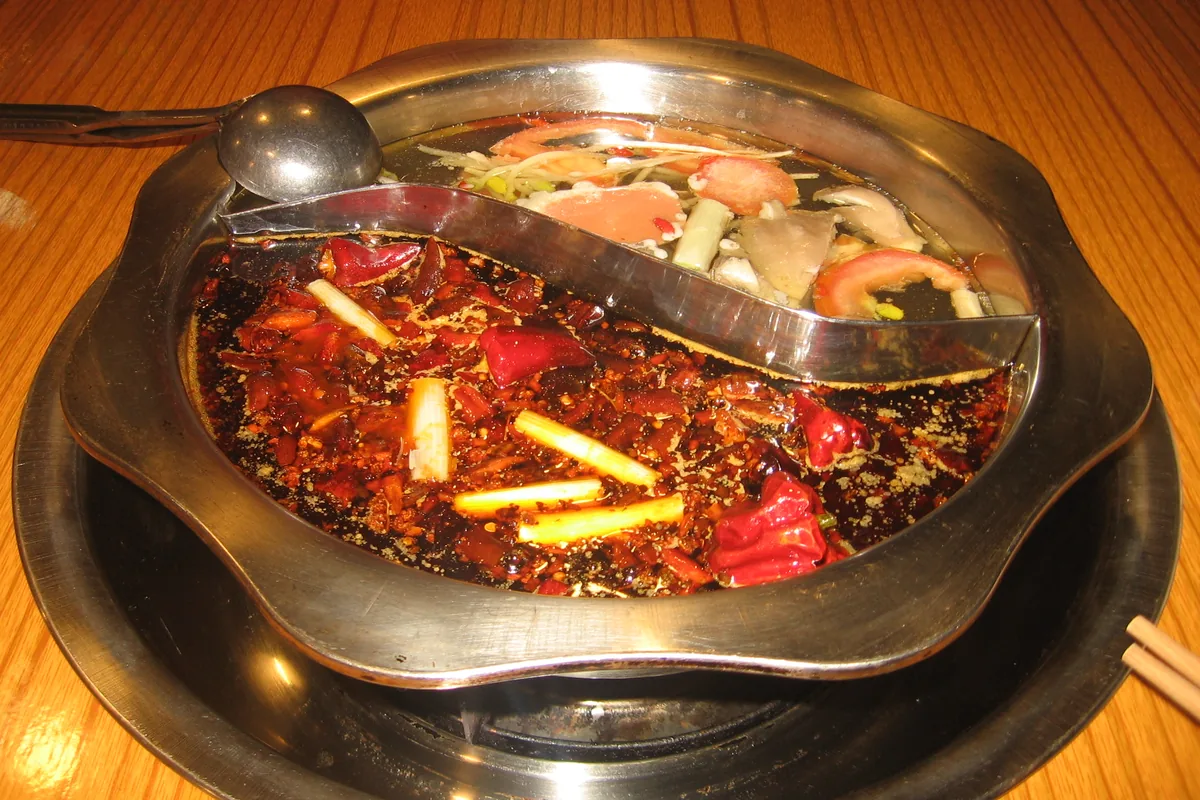
T&T, H Mart, Galleria, Oceans and most independent Chinese and Korean grocers in Canada have a hot pot section in the freezer case with thin-sliced beef and lamb rolls, and many stock store-brand broth bases. Quantities below are generous; leftovers become noodle soup the next day.
| Category | For 4 | Good picks |
|---|---|---|
| Thin-sliced meat | 600 to 800 g | Frozen beef or lamb rolls, pork belly slices |
| Seafood | 400 g | Shell-on shrimp, fish fillet in chunks, squid |
| Balls and dumplings | 400 g | Fish balls, beef balls, frozen or homemade dumplings |
| Tofu | 2 kinds | Firm tofu, fried tofu puffs, frozen tofu, tofu skin |
| Mushrooms | 400 g | Enoki, shiitake, oyster, king oyster slices |
| Greens | 1 kg total | Napa cabbage, tong ho (crown daisy), spinach, watercress, bok choy |
| Starch | for the end | Sweet potato glass noodles, udon, instant noodles, rice cakes |
If you’re making dumplings anyway, our pork and napa cabbage jiaozi freeze well and go straight from the freezer into the clear broth.
Dipping sauces
Set out bowls and let everyone build their own. Three combinations cover most tastes:
- Sesame: 3 tbsp Chinese sesame paste loosened with 2 tbsp warm water, 1 tsp soy sauce, 1 tsp sugar, chopped cilantro. Very good with lamb.
- Chongqing oil dip: 3 tbsp toasted sesame oil, 1 tbsp minced garlic, a pinch of salt, optional 1 tsp oyster sauce. It cools red-broth bites.
- Soy and vinegar: 2 tbsp light soy, 1 tbsp black vinegar, chili oil, green onion. Best with dumplings and seafood.
How to cook at the table
Keep the broth at a steady boil when raw meat or seafood goes in; a lazy simmer slows everything down. Order matters:
- Start with things that flavour the broth and take time: mushrooms, napa stems, tofu, balls.
- Swish thin meat slices until no pink remains, usually well under a minute for frozen rolls. Cook shrimp until opaque and curled; fish until it flakes.
- Add leafy greens in small handfuls; they take seconds.
- Finish with noodles in the reduced broth.
One habit worth keeping from food-safety guidance: don’t use the same chopsticks or plate for raw meat and for eating. Health Canada advises against reusing plates or utensils that touched raw food until they’re washed. Give each person a pair of serving chopsticks or a small strainer basket for raw items, and use separate platters for raw and cooked food. Health Canada’s safe internal temperature for poultry pieces and shellfish is 74°C, which is why chicken should go in sliced thin and stay in the boiling broth until cooked through.
Next day
Strain the leftover broth, chill it and reheat to a full boil for noodles. Health Canada says to bring soups and sauces to a rolling boil when reheating. If you’d rather have someone else do the work, our Richmond dumpling trail and Ottawa Chinatown guide cover restaurant options, and the noodle soup tools guide covers pots and ladles in more depth.
FAQ
Can I use a butane stove for hot pot indoors?
Health Canada says portable butane stoves should never be used indoors or in confined spaces because they can produce carbon monoxide. Use an induction burner or an electric hot pot at home.
What do you need for hot pot at home?
A wide pot (ideally split), a safe tabletop heat source, one or two broths, thin-sliced meat, seafood, tofu, mushrooms, greens, noodles, dipping sauces, and separate chopsticks for raw food.
How much meat per person for hot pot?
Plan on 150 to 200 g of thin-sliced meat per person, plus seafood, tofu and plenty of vegetables.
Research sources
- Chongqing Municipal Local Chronicles Office, “Chongqing hot pot” (intangible heritage profile, Dec. 2024, in Chinese): dfz.cq.gov.cn
- Health Canada, “Barbecue and portable butane stove safety”: canada.ca
- Health Canada advisory, “Health Canada cautions campers about portable butane stoves” (RA-76109, 2021): recalls-rappels.canada.ca
- Health Canada, “Carbon monoxide: Overview”: canada.ca
- Health Canada, “Safe cooking temperatures” (2024): canada.ca
- Health Canada, “Food safety tips for leftovers”: canada.ca
Tours