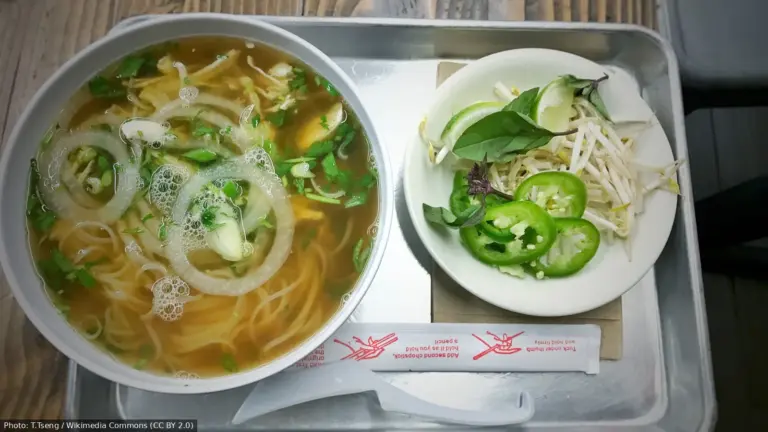
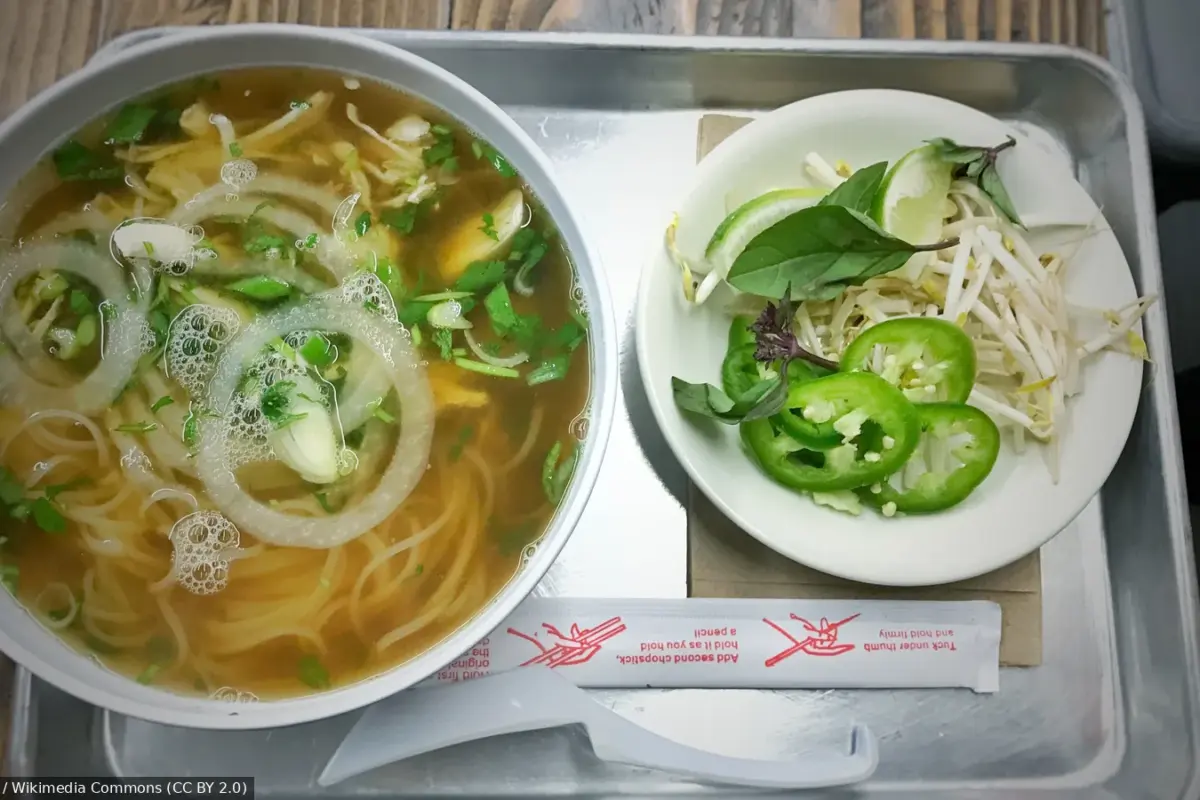
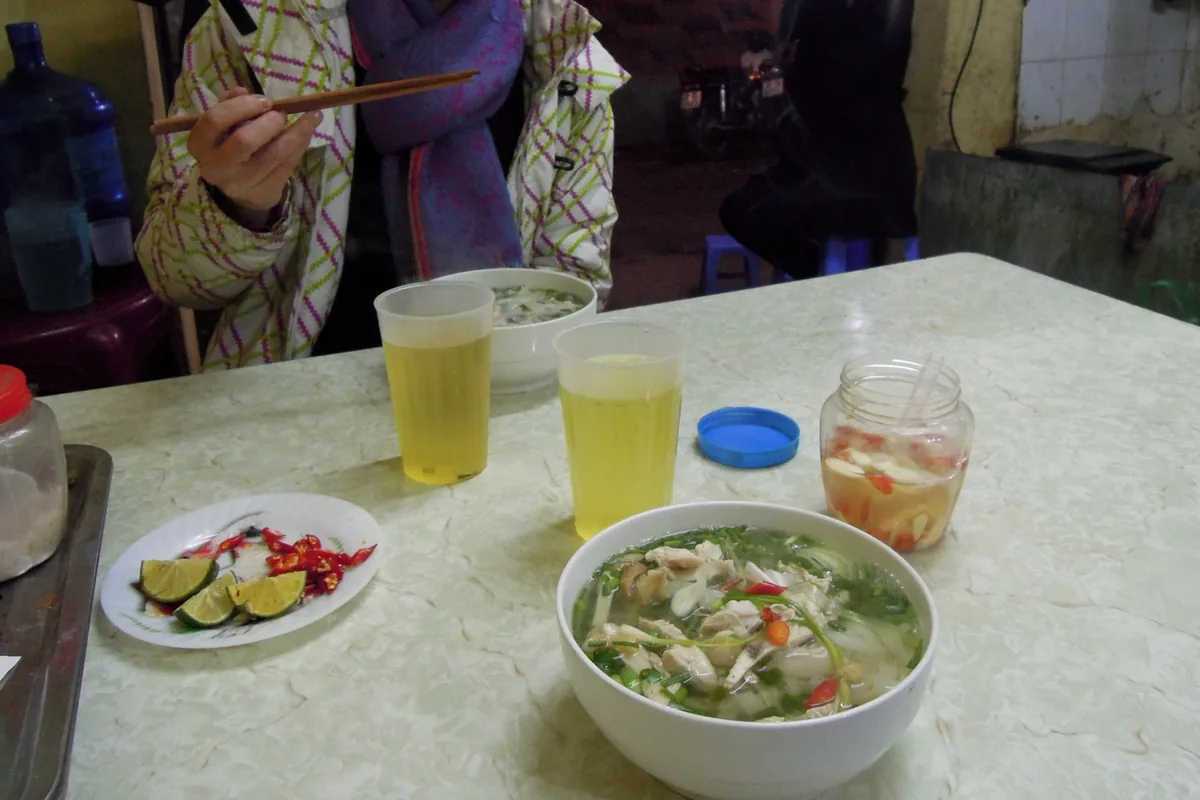
Beef pho takes an afternoon. Chicken pho, phở gà, takes about two and a half hours, and most of that’s a pot you barely touch. It’s the version to make on a cold Sunday in November: lighter, cleaner and gentler on the wallet, because half of the broth comes from chicken backs and necks that Canadian butcher counters often sell for very little. This guide builds on the method Andrea Nguyen published in Into the Vietnamese Kitchen, with metric amounts, Health Canada food-safety numbers and swaps for what you can actually find in Canadian stores.
Why chicken pho needs its own spice plan
The mistake most home cooks make is treating phở gà as beef pho with the meat swapped. The two broths want different things. Beef pho leans on star anise, cinnamon and cloves to stand up to marrow bones that simmer for four hours or more (our beef pho recipe runs about 4½ hours). Chicken broth is more delicate and turns muddy if you load it with the same spice bag.
Nguyen notes that some cooks do use beef-pho spices for chicken, but her family prefers toasted coriander seed and a bunch of cilantro to keep the two soups distinct. We follow that lead, with a single star anise as an optional extra for people who want a faint licorice note. The other big difference is timing: the whole chicken comes out of the pot early, once it’s cooked through, while the backs and necks keep going to build body.
Ingredients
Broth
- 1 whole chicken, about 1.8 kg (4 lb), excess fat and tail removed
- 1.3 kg (3 lb) chicken backs, necks or wing tips
- 2 yellow onions, about 450 g (1 lb) total, unpeeled
- 1 piece fresh ginger, about 10 cm (4 in), unpeeled
- 4.75 L (20 cups) cold water
- 2 tbsp (30 ml) coriander seeds
- 4 whole cloves
- 1 star anise (optional)
- 1 small bunch cilantro, stems tied
- 1½ tbsp kosher salt (use 1 tbsp if using table salt), plus more to taste
- 45 ml (3 tbsp) fish sauce, plus more to taste
- 25 g (about 2 tbsp) rock sugar, or 1½ tbsp granulated sugar
Bowls
- 700 to 900 g (1½ to 2 lb) small flat rice noodles (bánh phở), dried or fresh
- 1 small yellow or white onion, sliced paper-thin and soaked in cold water for 30 minutes
- 4 green onions, green parts thinly sliced
- ⅓ cup chopped cilantro leaves
- Black pepper
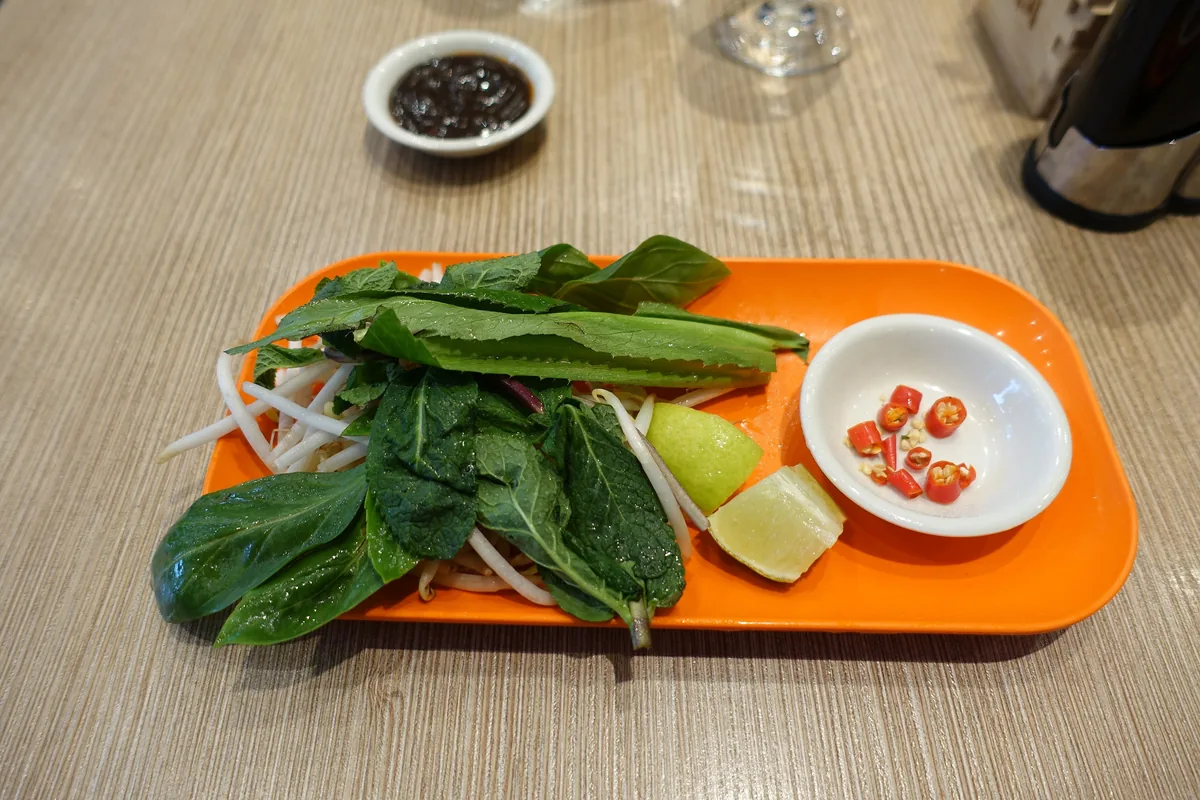
- For the table: 225 g (½ lb) bean sprouts, Thai basil or mint, sliced Thai chilies or jalapeño, lime wedges, hoisin and chili sauce
Method
- Char the onion and ginger (15 min). Hold them over a gas flame with tongs, or set them on a foil-lined tray 8 cm (3 in) under a broiler on high, turning every few minutes until the skins blister and blacken in patches. Let them cool, rub off the burnt skin under warm water, halve the ginger and bruise it with the side of a knife.
- Blanch the chicken and bones (10 min). Cut the wings off the whole chicken and add them to the backs. Put everything in a large pot, cover with cold water, bring to a hard boil for 2 to 3 minutes, then drain and rinse off the grey scum. Scrub out the pot. This step is what keeps the broth clear. A pot of at least 11 L (12 qt), such as the Cuisinart 12-quart stockpot, leaves room for a whole bird plus backs without boiling over.
- Toast the spices (2 min). Toast the coriander seeds, cloves and star anise in a dry skillet over medium heat for about a minute, until fragrant. Tie them in a square of cheesecloth or drop them in a tea ball.
- Start the simmer. Return the chicken and bones to the clean pot with 4.75 L cold water, the charred onion and ginger, salt, fish sauce and sugar. Bring just to a boil, skim, then lower the heat until only a few bubbles break the surface. Add the spice bag and the cilantro bunch.
- Pull the whole chicken (about 25 to 30 min). Lift it out once the thickest part of the thigh reads 82°C (180°F), Health Canada’s target for whole poultry. A probe such as the ThermoPro TP19H instant-read thermometer takes the guessing out of it. Plunge the bird into a bowl of cold water for 5 minutes so the skin tightens, then let it rest.
- Return the carcass (1½ hours). When the chicken is cool enough to handle, pull the breast and leg meat off in large pieces, wrap it and refrigerate. Put the carcass back into the pot and keep the broth at a lazy simmer for another 1½ hours. Fish out the spice bag after 45 minutes; long-simmered cloves turn bitter.
- Strain and season. Strain through a fine sieve lined with a damp paper towel. You should have about 3.5 to 4 L. Skim the fat, or chill the broth and lift it off. Taste it hot and adjust with salt, fish sauce and a pinch of sugar. It should taste slightly too salty on its own, because the noodles will dilute it.
- Cook the noodles at the last minute. Soak dried noodles in hot tap water for 15 to 20 minutes, then dunk one portion at a time in boiling water for 15 to 30 seconds. A long-handled spider strainer lets you lift each portion out in one scoop instead of draining the whole pot.
- Build the bowls. Noodles first, then sliced chicken, onion, green onion, cilantro and pepper. Bring the broth back to a rolling boil and ladle about 375 ml (1½ cups) over each bowl. A 4-oz ladle like the Starfrit Asian ladle makes portions even: three ladles per bowl.
Mistakes to avoid
- A rolling boil. Hard boiling emulsifies fat into the broth and clouds it. If you see more than a few bubbles at a time, turn it down.
- Leaving the whole chicken in for the full simmer. The meat goes dry and stringy, and you lose the best part of the bowl.
- Seasoning cold broth. Salt and fish sauce taste weaker in cold liquid; always season at serving temperature.
- Small bowls. A proper serving needs a bowl of 1.2 L (40 oz) or more. Cereal bowls force you to skimp on broth, which is the whole point. Our noodle soup tools guide covers bowl sizes in detail.
- Cooking noodles in the broth. Starch from the noodles turns the broth cloudy and gummy. Keep a separate pot of plain water.
Swaps for Canadian kitchens
- If you can’t find chicken backs, use 1.3 kg of wings, or ask the butcher counter at a large supermarket for frames; they’re often kept in the back.
- Stewing hen or older bird. If an Asian grocer sells a stewing hen (sometimes labelled “old hen”), add it with the backs for a deeper broth, but simmer it the full time; it’s too tough to slice.
- Out of rock sugar, granulated is fine; use a little less, because rock sugar is milder.
- Pressure cooker. Nguyen also publishes an Instant Pot chicken pho for weeknights, if you’ve an electric pressure cooker of 6 qt or larger.
- Fish sauce. Look for a brand with a short ingredient list (anchovy and salt). Red Boat is one example; Three Crabs and Viet Huong are common in Asian grocers.
Where to buy the ingredients in Canada
Asian supermarket chains such as T&T Supermarket, with stores in several provinces, carry fresh and dried bánh phở, rock sugar, Thai basil and culantro (ngò gai). In the GTA, independent Vietnamese and Chinese grocers on Spadina Avenue and Gerrard Street East are worth a look; in Montréal, the grocers of Chinatown carry the same staples. Regular supermarkets now stock fish sauce, rice noodles and bean sprouts in most cities, so the only hard-to-find item is usually culantro, which you can skip.
Storing and reheating
Health Canada advises refrigerating or freezing cooked food within two hours. Its storage chart gives meat broth and stock 3 to 4 days in the fridge at 4°C and 4 to 6 months in the freezer at -18°C. Cool the broth in shallow containers with the lid off until steaming stops, then cover. Freeze broth in 1.5 L portions (enough for four bowls). When you reheat soup, Health Canada recommends bringing it to a full, rolling boil.
More Vietnamese cooking and where to eat it
Round out the meal with gỏi cuốn fresh rice paper rolls, or try the spicier, lemongrass-heavy bún bò Huế. If you’d rather someone else watch the pot, see our guides to where to eat pho in Toronto and the best pho in Edmonton.
FAQ
What is the difference between phở gà and phở bò?
Phở gà uses chicken and a lighter spice blend, often coriander seed and cilantro, and simmers for about 2 hours. Phở bò uses beef bones, brisket and a heavier spice bag (star anise, cinnamon, cloves) and usually simmers for 4 hours or more.
Can I make chicken pho with only chicken breasts?
You can, but the broth will be thin. Bones, backs and skin provide the gelatin and body. If you only have breasts, poach them in store-bought low-sodium chicken stock with the charred onion, ginger and spices for 30 minutes.
How long does pho broth keep?
Health Canada’s storage chart lists meat broth and stock at 3 to 4 days in the fridge and 4 to 6 months in the freezer.
Research sources
- Andrea Nguyen, “Chicken Pho Noodle Soup Recipe (Pho Ga),” Viet World Kitchen, from Into the Vietnamese Kitchen (Ten Speed Press, 2006): vietworldkitchen.com
- Andrea Nguyen, “Instant Pot Chicken Pho Recipe,” Viet World Kitchen: vietworldkitchen.com
- Health Canada, “Safe cooking temperatures” (2024): canada.ca
- Health Canada, “Storing leftovers” infographic (2024): canada.ca
- Health Canada, “Food safety tips for leftovers”: canada.ca
Tours