
If your grocery bill has felt heavier since Halloween, the numbers agree with you. Statistics Canada says prices for food bought in stores were up 2.0% year over year in October, after four months of slowing. Early November tracking points higher again, led by produce. Loblaw’s executives told analysts last week that suppliers are lining up bigger increases for early 2027. Here’s what the latest data actually says, what’s behind it, and how we’d plan holiday cooking around it without turning dinner into a spreadsheet.
What the October numbers say
Statistics Canada released the October Consumer Price Index on Nov. 16. Overall inflation held at 3.1%. Grocery inflation (food purchased from stores) rose to 2.0% from 1.7% in September. The drivers StatCan named were fresh vegetables, which went from a 2.9% drop in September to a 1.4% rise in October, plus sugar and confectionery (up 0.4%) and condiments, spices and vinegars (up 2.6%).
Two details are easy to miss. First, grocery inflation was still below overall inflation for the third straight month, so food isn’t the main thing pushing the headline number. Gasoline is: it was up 30.9% from a year earlier. Second, StatCan puts grocery prices 31.9% above October 2020. That’s the gap most households feel, and a single month of 2% doesn’t close it.
| Measure (Statistics Canada, October 2026) | Year-over-year change |
|---|---|
| All-items CPI | 3.1% |
| Food purchased from stores | 2.0% (September: 1.7%) |
| Fresh vegetables | 1.4% (September: -2.9%) |
| Condiments, spices and vinegars | 2.6% |
| Gasoline | 30.9% |
| Groceries vs. October 2020 | 31.9% higher |
November looks worse for produce
Sylvain Charlebois of Dalhousie’s Agri-Food Analytics Lab wrote on Nov. 23 that the basket tracked by GroceryPulse.ca cost 2.1% more in the first three weeks of November than in October. Vegetables were up 11.4% and fruit 7.1% on that tracker. He points to higher energy costs and a weaker loonie, which bite hardest in winter, when Canada imports more of its fruit and vegetables. That’s a private tracker, not StatCan, and month-to-month swings in produce are normal at this time of year. Still, it lines up with what StatCan saw starting in October. The official November CPI comes out in mid-December.
Why grocers expect a bumpier 2027
Loblaw’s November Food Inflation Report, published Nov. 18, focuses on fuel: diesel and gasoline costs work their way into farming, processing and trucking, and that takes time to reach the shelf. On the company’s earnings call the next day, CEO Per Bank said big packaged-goods suppliers are asking for increases “over and above the inflation rate”, as The Canadian Press reported. Grocers are in their usual holiday price-freeze window, when they don’t accept supplier increases from November to February, so the pressure is likely to show up after that. CFO Richard Dufresne put it plainly: “we’re going to feel it more in 2027.”
Bank also gave a glimpse of how people are already shopping. Frozen vegetables were up 7% against fresh, organic fruit was down 9%, and ground beef was up while steak was down. In other words, Canadians are trading down, and they’re doing it in the meat case and the freezer aisle.
The next big marker is Canada’s Food Price Report 2027, the 17th edition, which Dalhousie and its partners have said will be released on Dec. 3.
How we’d plan holiday cooking around it
None of this means skipping the turkey. It means putting money where it shows on the plate and saving it where it doesn’t.
Lean on frozen and canned produce for the sides
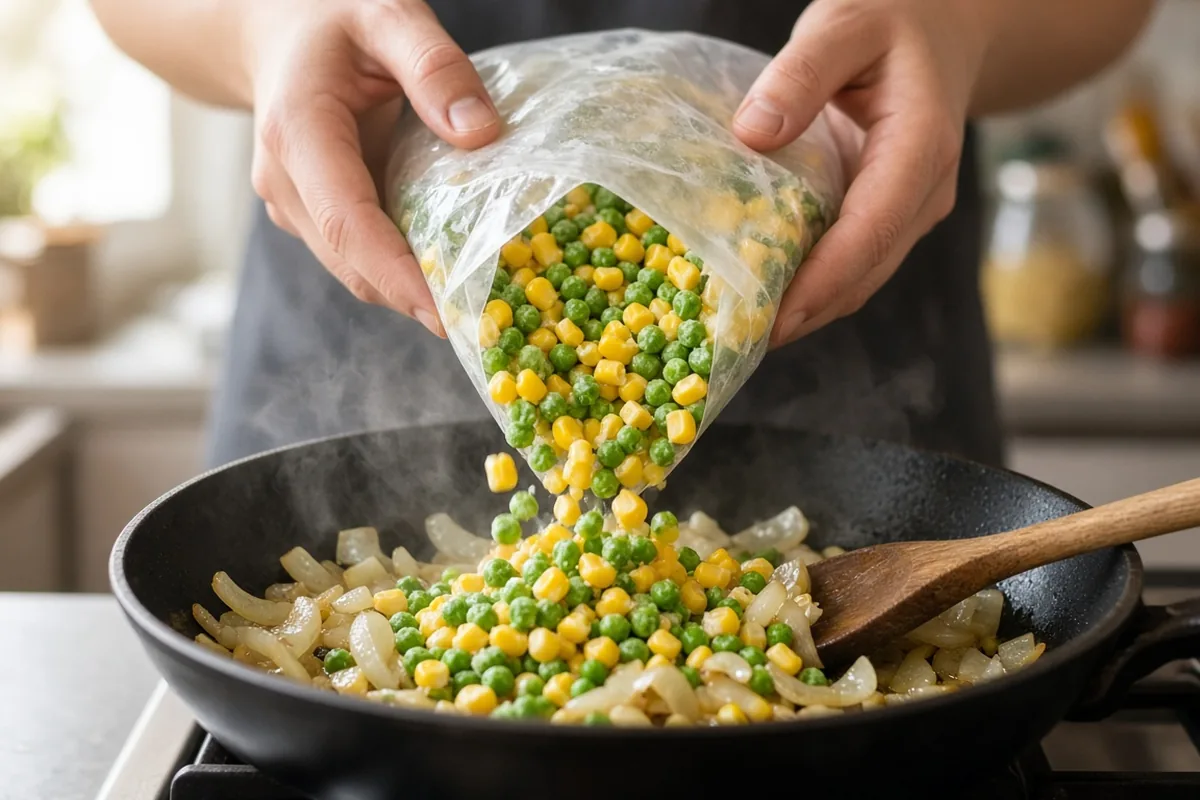
Health Canada’s healthy-eating-on-a-budget advice says frozen and canned vegetables and fruit are healthy options and can cost less than fresh when produce is out of season, which is now. Frozen peas, corn, green beans and spinach are fine in a holiday spread, especially in anything creamed, gratinéed or stirred into stuffing. Save fresh money for the one salad people will notice.
Cook with what Canada grows in winter
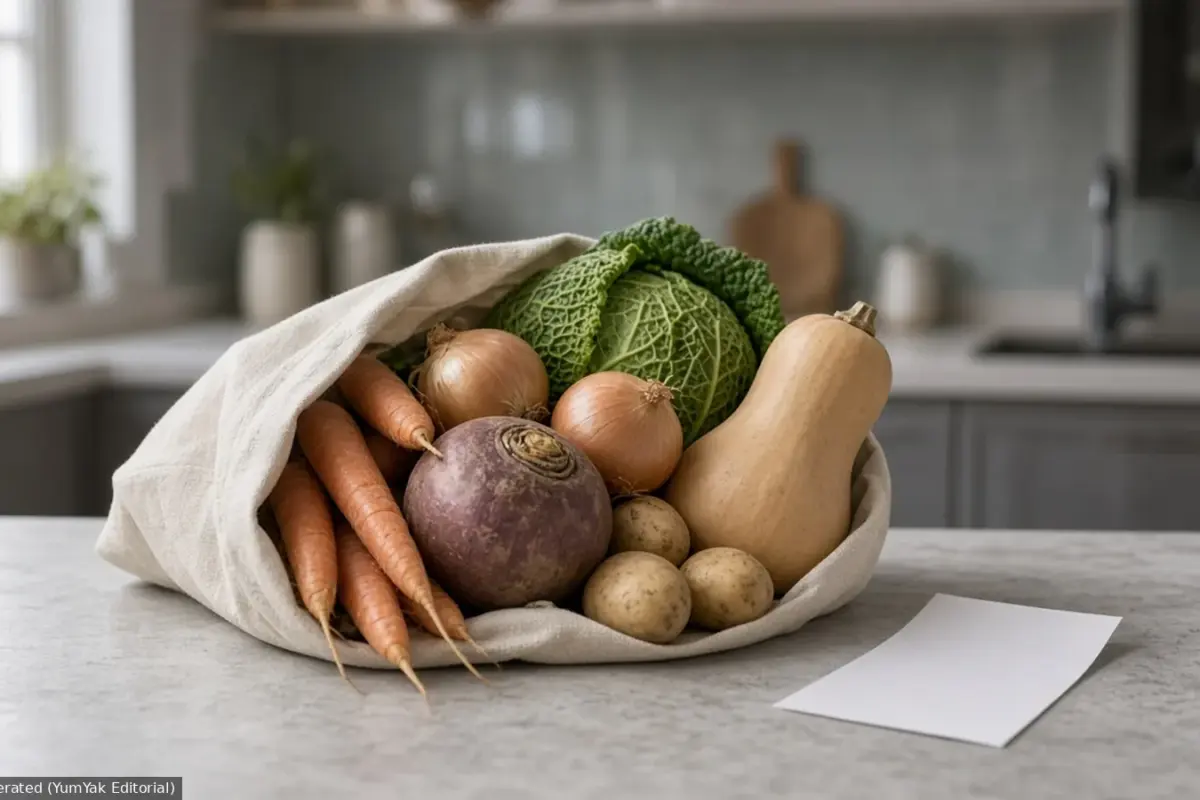
Carrots, potatoes, onions, rutabaga, cabbage, beets and winter squash keep for months in cold storage, and they’re the backbone of a Canadian holiday table anyway. A tray of roasted roots with maple and thyme does more for the table than out-of-season imports flown in for one meal.
Do the per-unit maths
Health Canada’s same guide tells shoppers to compare the unit price on the shelf label, and to look above and below eye level, where brands pay for placement. Our Black Friday deal check applies the same idea to pantry staples online.
Stretch the protein, then use every bone
Ground meat and whole birds give you more meals per dollar than steaks, which is exactly the trade Loblaw says shoppers are already making. A turkey carcass becomes stock; our chicken pho method works with a turkey frame. If you’re roasting a bird, our turkey thermometer guide helps you avoid the costliest mistake of all, which is a dry one.
Buy sale items for the freezer
Health Canada suggests freezing sale-priced fish, fruit, vegetables, bread and lean meat to extend their life. If you bake, butter is the one to watch: buy it when you see a genuine low and freeze it, well wrapped.
Put a cheap, cozy meal in the rotation
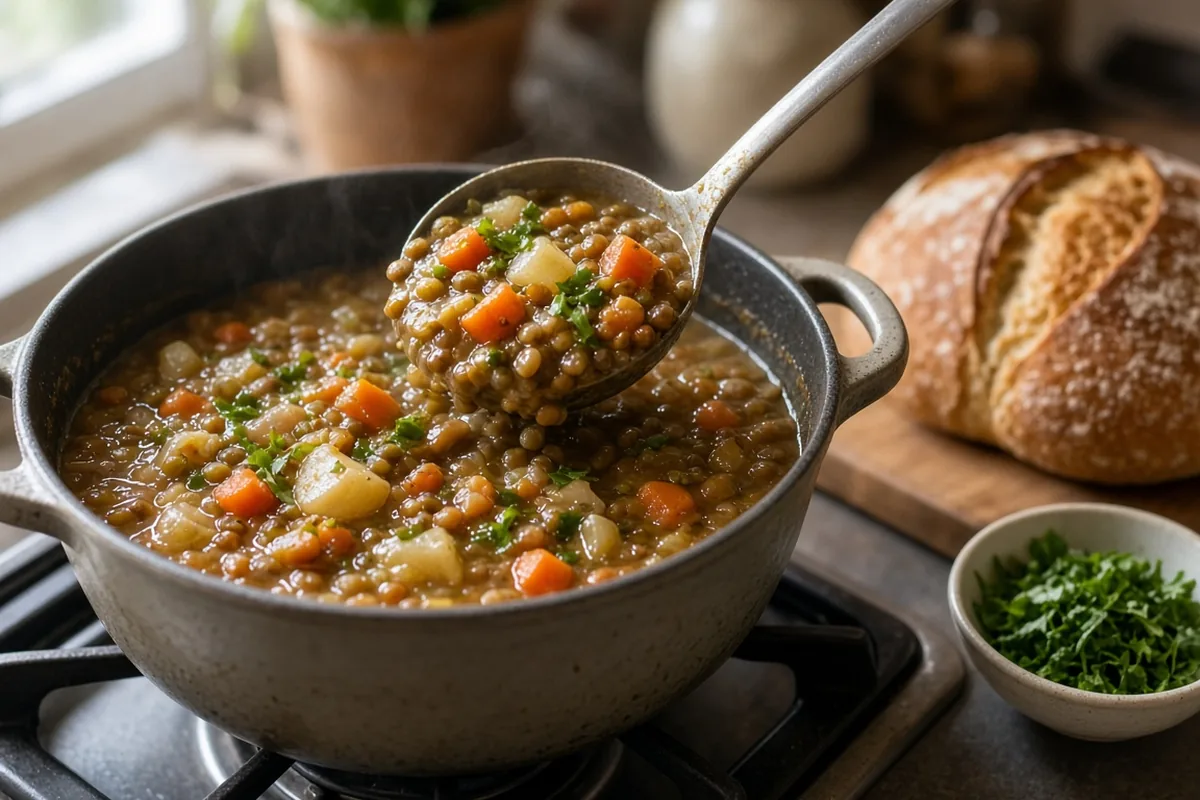
Beans and lentils are, as Health Canada notes, inexpensive protein foods. A pot of lentil and root vegetable soup between holiday parties costs very little and freezes well. A hot pot night, with a big broth and lots of tofu and greens, feeds a crowd for less than most roasts; our hot pot at home guide has a shopping list for four.
Quick swaps for the holiday table
| Instead of | Try | Why it works |
|---|---|---|
| Fresh imported berries for dessert | Frozen berries cooked into a compote | Health Canada counts frozen fruit as a healthy option; cooking hides any softness |
| Fresh green beans in a casserole | Frozen green beans | They go into a creamy bake anyway |
| Steak for a crowd | A whole turkey or chicken, then stock from the bones | More meals from one purchase |
| Pre-grated cheese | A block you grate yourself | Health Canada lists grated cheese among prepped foods that cost more |
| Single-serve snacks for guests | Family-size packs, portioned out | Health Canada notes single-serve packaging can cost more |
What to watch next
- Dec. 3: Canada’s Food Price Report 2027 sets the forecast for next year.
- Mid-December: Statistics Canada’s November CPI will show whether the produce jump in private trackers shows up in official data.
- February: the end of grocers’ holiday price freeze, when Loblaw expects supplier increases to start landing.
We’ll update this page when those numbers are out.
FAQ
How much did grocery prices go up in Canada in October 2026?
Statistics Canada says prices for food purchased from stores rose 2.0% year over year in October 2026, up from 1.7% in September. Overall inflation was 3.1%.
Will food prices go up in 2027?
Loblaw executives said in November 2026 that suppliers are pushing larger increases, which they expect to be felt more in 2027 after the holiday price freeze. Canada’s Food Price Report 2027 is due Dec. 3, 2026.
Are frozen vegetables as healthy as fresh?
Health Canada says frozen and canned vegetables and fruit are healthy options and can be less expensive than fresh when produce is out of season.
Research sources
- Statistics Canada, The Daily, “Consumer Price Index, October 2026” (Nov. 16, 2026): www150.statcan.gc.ca
- Loblaw, “November Food Inflation Report” (Nov. 18, 2026): loblaw.ca
- The Canadian Press via Global News, “Loblaw warns food prices may rise next year amid higher fuel costs” (Nov. 19, 2026): globalnews.ca
- Sylvain Charlebois, Troy Media, “Rising grocery prices are only half the problem facing grocers” (Nov. 23, 2026): troymedia.com
- Health Canada, “Healthy eating on a budget”: canada.ca
- Dalhousie University, “Canada’s Food Price Report”: dal.ca